
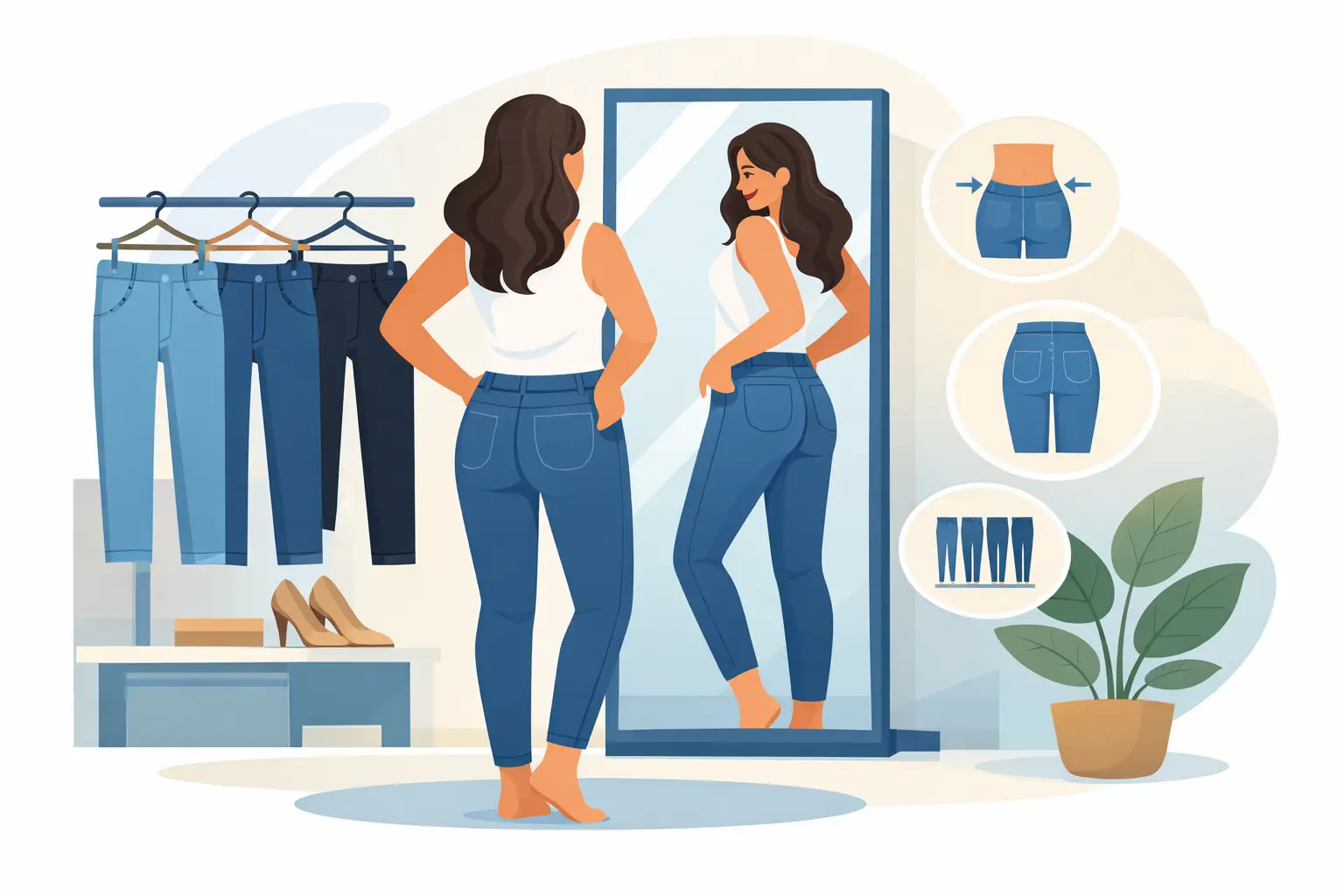


A pair of jeans can be the most frequently worn item of clothing in your wardrobe – and at the same time the hardest to get to fit properly. If you often find that your jeans are too tight across the thighs, gape at the waist or are too short in the legs, you’re far from alone. Finding the right fit for your jeans isn’t about squeezing into a particular style, but about choosing a style that suits your body shape.
For many men, the problem isn’t just the size. It’s the combination of waist measurement, thigh width, seat and leg length that determines whether a pair of jeans becomes a favourite or ends up at the back of the wardrobe. Especially if you wear larger or longer sizes, it makes sense to take a more systematic approach.
How to find the right fit for your jeans without any guesswork
The best place to start is to take an honest look at where your current jeans work – and where they don’t. Do they feel tight when you sit down? Do they slip down at the front? Are they too wide around the lower leg? Many men buy jeans out of habit and choose the same size as last time, even though the fit clearly wasn’t quite right.
Jeans shouldn’t feel like work trousers from a bygone era, nor should they be something you have to hold your breath to get into. A good fit provides room in all the right places and a flattering silhouette throughout the rest of the trousers. This means you need to know the key fit points before you look at colour, wash or brand.
Start with your waist – but don’t stop there
The waist is the first thing most people look at, but it doesn’t tell the whole story. Jeans can fit perfectly at the waist and still sit awkwardly across the tummy, bum or thighs. If you’re using a belt to save a pair of trousers that would otherwise be loose or crooked, it’s often a sign that the cut isn’t right for you.
Always try to check the fit around the waist whilst standing and sitting. When you’re standing, your jeans should fit snugly without feeling too tight. When you sit down, they should give a little, but they mustn’t dig into your stomach. For men with a little more weight around the tummy, it’s often important that the trousers aren’t too low at the front, as this can quickly result in a loose and uncomfortable fit.
The thighs quickly reveal whether the model is wrong
If you feel any tightness across your thighs when walking, sitting down or getting into the car, your trousers are usually too tight at the top. Going up a size rarely helps if the problem is the cut of the trousers themselves. You’ll just risk them being too big at the waist, whilst they still don’t hang properly.
Men with muscular thighs generally find a regular or comfort fit more flattering than a slim fit. It’s not about style, but about proportions. A straighter or more generous cut creates a more balanced look and allows for greater freedom of movement. It also generally looks better than jeans that are too tight in one place and too loose in another.
The most common jeans fits – and who they suit
When you’re looking for the right style, it helps to know the difference between the typical fits. The names vary slightly from brand to brand, but the basic shapes are often the same.
Regular fit
For many men, a regular fit is the safe choice. It offers a classic fit with a reasonable amount of room around the thighs and seat, and a leg that follows the shape of the body without feeling tight. If you’re looking for jeans for both everyday wear and smarter occasions, this is often the place to start.
A regular fit is particularly good if you’re looking for a balanced look. The trousers shouldn’t be too tight, but they shouldn’t look baggy either. For many men in larger sizes It is precisely this middle ground that yields the best result.
Comfort fit or relaxed fit
If you need extra room around your stomach, seat or thighs, a comfort fit is often the better choice. This style offers more room in the upper part of the trousers, and it makes a noticeable difference throughout the day. Especially if you spend a lot of time sitting down, driving or simply want jeans that work with your body rather than against it.
That doesn’t mean the trousers have to look baggy. A good comfort fit can still look smart and neat if the leg width is in proportion to the rest of the body.
Straight fit
A straight fit has a straight leg from the thigh down. It’s a fit that many people overlook, but it can be a really good choice if you want to avoid trouser legs that are either too narrow or too wide. It gives a classic look and suits many body types.
For taller men or men with longer legs, a straight fit is often an advantage, as it creates a more balanced silhouette. If the trousers are also long enough, you’ll achieve a much more polished look.
Slim fit – only when the proportions are right
A slim fit can work well, but only if there’s enough room in the right places. Many people choose a slim fit to achieve a more modern look, but the result is rarely good if the trousers are tight across the thighs or pinch at the crotch. A slimmer silhouette still needs to be comfortable.
If you want a smarter, more contemporary cut, a regular or straight-leg style with slightly narrower legs is often a better choice than a classic slim fit.
Leg length isn’t just a minor detail
A pair of jeans won’t fit properly if the leg length is wrong. Jeans that are too short quickly look unfinished, whilst jeans that are too long bunch up at the ankle and make the whole pair look heavy. This is particularly true for tall men, who all too often have to make do with standard lengths that simply aren’t long enough.
When trying on jeans, the leg should fall naturally. It’s fine if there’s a slight crease over the shoe, but it shouldn’t fold over several times. If you wear plus sizes, it is worth paying particular attention to whether the design is also correctly constructed at the knees and thighs – not just extended at the bottom.
Washing, stretching and fabric alter the experience
Two pairs of jeans in the same size can fit differently, even if the label says the same thing. The fabric matters more than many people realise. Stretch jeans give a bit more give and can be a big advantage if you want freedom of movement without having to settle for a style that’s too loose.
At the same time, there is a limit. Too much stretch can cause the trousers to lose their shape during the day, especially if they’re already a bit tight. Heavier denim often holds its shape better, but also feels stiffer. Here, the choice depends on how you wear your jeans in everyday life.
Dark washes typically look a bit smarter and more understated, whilst lighter washes feel more relaxed. The fit is still the most important thing, but the wash can help create the look you’re going for.
How to assess the fit when trying on jeans
It’s tempting just to glance in the mirror and make up your mind in 20 seconds. But the real test is whether the jeans work when you’re on the move. Take a few steps. Sit down. Bend your knees. Check the fit at the waist, crotch and thighs. If something’s already bothering you in the fitting room, it won’t get any better after a whole day.
Also keep an eye out for the small signs. Is the waist gaping at the back, even though the thighs feel tight? If so, the fit is probably wrong. Are there horizontal creases across the front? If so, there’s often not enough room somewhere. If the trouser leg hangs crookedly, this could be down to both the length and the cut.
At Birger, many men find that it makes a big difference to shop somewhere where the range is actually tailored to larger and longer sizes. This offers more realistic choices and less guesswork.
When size and fit aren’t the same
This is perhaps the most important point of all. A larger size does not automatically mean a better fit. If the cut is wrong, a few extra centimetres rarely make much difference. On the contrary, the trousers may start to sag in the wrong places, whilst the problem remains.
That’s why it makes sense to think about the style first and the size second. Find the fit that suits your body shape, and then adjust the size within that style. That’s usually the quickest way to find a pair of jeans you’ll actually want to wear again.
How to find a pair of jeans that fit well and last for everyday wear
The best jeans aren’t necessarily the ones that look their best for five minutes in front of the mirror. They’re the ones you can wear all day without having to think about them all the time. Good jeans should work when you’re walking to work, sitting down at the table, driving and getting up again.
If in doubt, choose comfort over ambition. A pair of jeans that offers comfort, freedom of movement and a nice drape will almost always be the right choice. When trousers fit properly, you can both see it and feel it – and that’s usually where good style begins.
Facebook
WhatsApp
Twitter
LinkedIn
Pinterest
Latest posts

Big & Tall: What does it mean - and what size is right for you?
22 December 2025
No Comments
Everyday style guide: 7 outfits for plus size men
24 December 2025
No Comments

Jeans and chinos in 8XL: How to choose the right model
30 December 2025
No Comments
Shirts for big men: materials, cuts and comfort explained
2. January 2026
No Comments
Underwear for plus sizes: Comfort without compromising on support
8. January 2026
No Comments
