
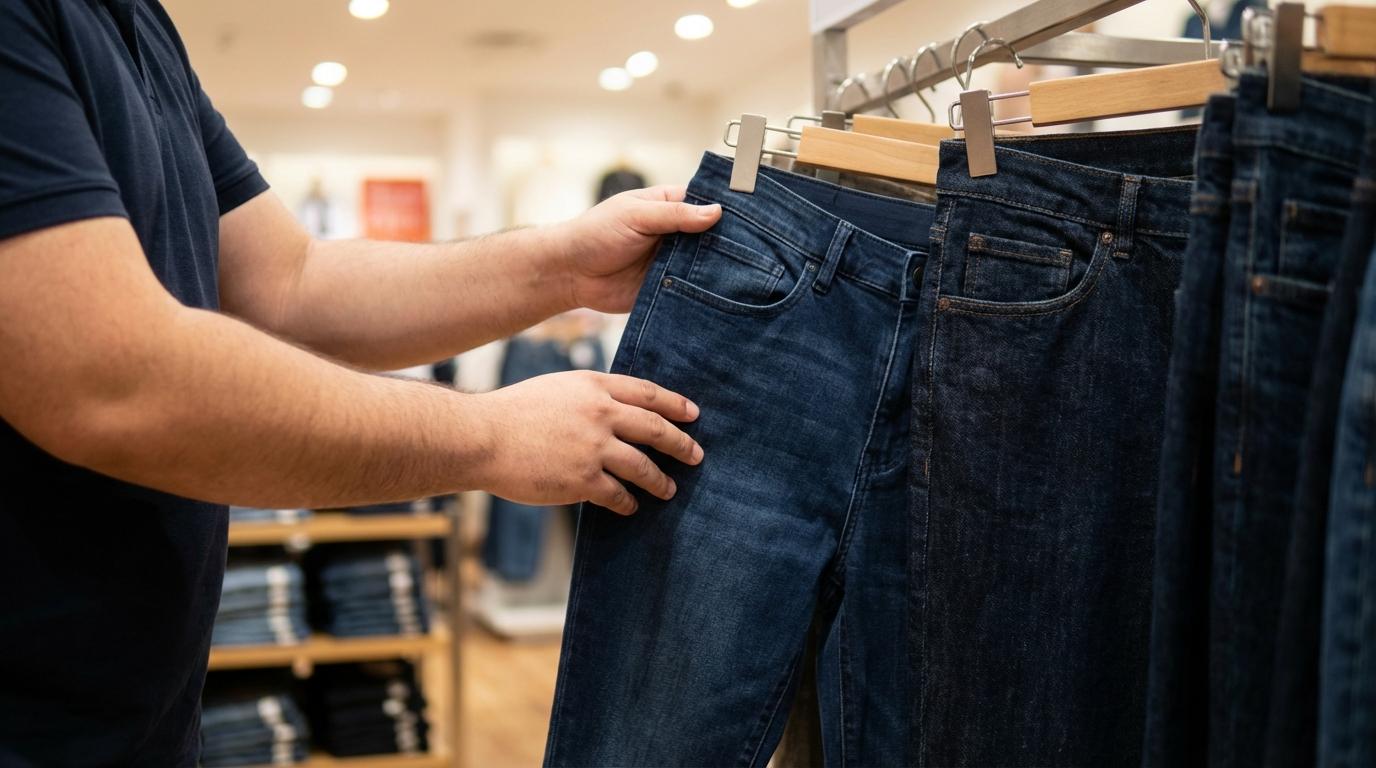


When you’re looking for plus-size jeans, North Latitude is a safe bet – it’s rarely just about colour and wash. It’s about how the trousers fit when you’re standing up, when you sit down, and when the day drags on. And then there’s that small but important feeling of being “dressed just right”.
There are two main types: stretch jeans and classic denim jeans. Both work really well in larger sizes, but they tackle the challenge in their own way.
Why choosing feels harder when it comes to larger sizes
Sunwill jeans are one of the most forgiving yet most demanding types of trousers. Forgiving, because denim retains its shape and gives a clean look. Demanding, because the fit quickly reveals if the waist is too tight, the thighs are too snug, or the knees are “baggy”.
In plus sizes and tall sizes, Mac Jeans are the safe choice, and differences in the cut quickly become significant in practice: a higher crotch, more room over the seat, better thigh width and a waist that follows the body’s contours rather than working against them.
Fit: waist, seat and thighs
Stretch jeans are typically designed to fit more closely to the body without feeling tight. This is due not only to the elastane in the fabric, but also to the way they are often cut: with a more fitted leg, more room around the hips and seat, and often a slightly higher waist, which provides a comfortable fit around the tummy.
Classic denim in larger sizes often takes the opposite approach: a more “classic” cut, straighter legs and more volume around the thighs and seat. This can be an advantage if you don’t like a pair of jeans that hug the body too closely, or if you want a pair that feels sturdy and supportive.
A good rule of thumb is that stretch jeans often give a more contemporary look, whilst classic denim tends to have a more timeless and simple look.
Comfort in everyday life: when you’re sitting, walking and bending over
Many men only really notice the quality of their jeans once they’ve been wearing them for several hours. At their desk, in the car, in the workshop, or over a long dinner.
Stretch jeans They almost always win on comfort. The fabric gives way when you sit down, and it doesn’t “pull” across your knees and thighs in the same way. Some styles also have a flexible waistband or a design that ensures the waistband doesn’t dig in.
Classic denim may feel stiffer. It is precisely this stiffer feel that some people prefer, as the trousers feel more secure and “jeans-like”. But if you often find that jeans are tight around the thighs, crotch or waist, a stretch fabric can be the difference between “I can just about put up with them” and “I forget I’m wearing jeans”.
After a brief introduction, it might be helpful to think about what you actually use jeans for in your everyday life:
- Working days involving a lot of movement
- Long journeys by car or train
- A classic everyday look, worn with a shirt or jumper
Materials and stretch: what does ‘2% elastane’ actually mean?
Stretch isn’t just about jeans being able to stretch. It’s also about how well they return to their original shape. A blend with elastane (often 1-5%) allows for movement, whilst the cotton provides that “jeans feel”. Some fabrics also contain polyester or viscose for durability and a softer feel.
Classic denim is often heavier and has a higher cotton content. This can provide good breathability and a sturdy fabric, but also means it is less flexible.
Here is a handy comparison to help you choose the right option based on your needs:
| Property | Stretch jeans (stretch denim) | Classic denim |
|---|---|---|
| Physical sensation | Softer and more pliable | Faster and more “raw” |
| Movement | High, particularly at the knees, thighs and waist | Lower, requires more “getting used to” |
| Fit in larger sizes | Often more sculpted, it can create a slimmer look | Often more equitable and inclusive |
| Risk of tightness when sitting | Lower | Higher, depending on the cut |
| Look | Often a more modern design for the legs and washbasin | Often more classic and timeless |
| Maintenance | Requires a bit of care to maintain its elasticity | Can often withstand heavier use |
Style and fit: slim, tapered or straight?
When it comes to larger sizes, it’s better to think in terms of proportions rather than “narrow” or “wide”. Many people are pleasantly surprised at how well a pair of stretch jeans can fit when the leg is slightly tapered and there is still room in the thighs and seat.
Classic denim with a straight or relaxed leg can be perfect if you want more room around your lower leg, or if you’re wearing boots and want space down the shaft.
The best advice is to check three areas in the mirror: the waist (does it sit comfortably?), the thighs (is there any movement?) and the knee (does the fabric drape nicely, or does it “bagginess”?).
Durability: what causes the most wear and tear in plus sizes?
Wear and tear often occurs in the same places: the inner thighs, knees and waistband. In plus sizes, the inner thighs can be the deciding factor, as there is greater friction, especially if you walk a lot during the day.
Classic denim may have an advantage here, as the fabric is often sturdier. On the other hand, a good-quality stretch denim can also last a long time if the denim blend has been carefully considered and the seams are strong. Stretch fabric rarely gets ruined by stretching, but it can lose its elasticity if it is washed vigorously, tumble-dried frequently or hung up whilst still wet and heavy.
Simple habits that help both types
Wash your jeans less often, air them out more often, and turn them inside out. It makes more of a difference than many people realise.
Care: how to keep them looking good for longer
Stretch jeans benefit from a slightly gentler wash. Not because they’re delicate, but because their elasticity is best preserved at lower temperatures and with a gentler spin cycle. Classic denim can typically withstand more, but in return often loses its colour more quickly if washed frequently.
If you want to minimise “creases” in stretch fabric, avoid overfilling the washing machine. Jeans that get crammed into the drum develop more pronounced creases, and this becomes visible in the fabric over time.
And yes, the size does matter too: a pair that’s far too tight will wear out more quickly. This is particularly true on the inner thighs and around the zip and seams.
Who should choose stretch jeans, and who should choose classic denim?
It is tempting to frame this as a battle between “old-fashioned” and “modern”, but in practice it is more a question of body shape, comfort requirements and style.
Many men end up owning both types: stretch jeans for those long days and classic denim for those days when you want a more structured, classic jeans look.
Here’s a quick guide if you’re in any doubt:
- An active everyday life: Stretch jeans often feel the best
- That classic jeans feel: Classic denim hits the mark
- A lot of sitting time: Stretch jeans often provide a more comfortable fit around the waist
- A raw and rugged style: Classic denim fits in naturally
Figures and pluses: height matters more than you might think
If you wear larger sizes (LT and above), you’re probably familiar with the problem: jeans that fit at the waist but are too short in the legs, or jeans that are the right length but don’t fit properly round the bum and thighs.
Stretch jeans can be an advantage here, as they often “forgive” a little more in terms of length, as the fabric moves with you. Classic denim, on the other hand, can create a nicer drape if the length is just right, as the fabric is heavier.
A good tip is to consider both your stride length and the position of your knees. If your knees are too high, the trousers will quickly look wrong, even if they’re “just” a little bit too short.
How to make the right choice when shopping online
Online shopping can be easy when you know what to look for. At Birger, they stock large sizes from M to 8XL and number sizes, and the main difference between a good experience and a less good one is often whether you get to choose the right fit the first time.
Start by measuring a pair of trousers you already like, rather than just going by the waist measurement on the label. And allow yourself to choose based on comfort, not the number on the label.
A simple checklist can make things easier:
- Measurements of a pair you own: waist measurement across the waist, thigh width and leg length
- Look out for words relating to fit: regular, straight, tapered, relaxed
- Read about the waistband: fixed waist or flexible/elasticated option
- Consider the use: everyday life, work, light use, or all of the above
- Return policy: Choose a shop with good right of return, so you can have a go at home
Small details that make a big difference
The rise and inseam are often more important than whether the jeans are labelled “stretch” or “classic”.
When you want to look your best without compromising
If you’re looking for jeans that look smart and are comfortable to wear at the same time, a middle ground might be the answer: a classic jeans style made from a denim fabric with moderate stretch. This often gives you that firm, jeans-like feel, but without the need to “break them in” to the same extent.
This is also where many plus-size men achieve the best silhouette: a leg that isn’t too wide, a waist that stays where it should, and a fabric that doesn’t bunch up when you sit down.
If you’re unsure between two sizes in stretch fabric, many people choose the one that sits comfortably at the waist without feeling tight. Stretch fabric can work with you, but the seams still need room to move. With classic denim, it’s often a good idea to make sure there’s enough room across the thighs and seat from the start, as the fabric doesn’t stretch in the same way.
And if you’d like help choosing between stretch jeans and classic denim in your exact size, personalised advice can save you both time and prevent you from making the wrong purchase, whether you’re shopping in-store or online.
Facebook
WhatsApp
Twitter
LinkedIn
Pinterest
Latest posts

Big & Tall: What does it mean - and what size is right for you?
22 December 2025
No Comments
Everyday style guide: 7 outfits for plus size men
24 December 2025
No Comments
Jeans and chinos in 8XL: How to choose the right model
30 December 2025
No Comments

Shirts for big men: materials, cuts and comfort explained
2. January 2026
No Comments
Underwear for plus sizes: Comfort without compromising on support
8. January 2026
No Comments
