
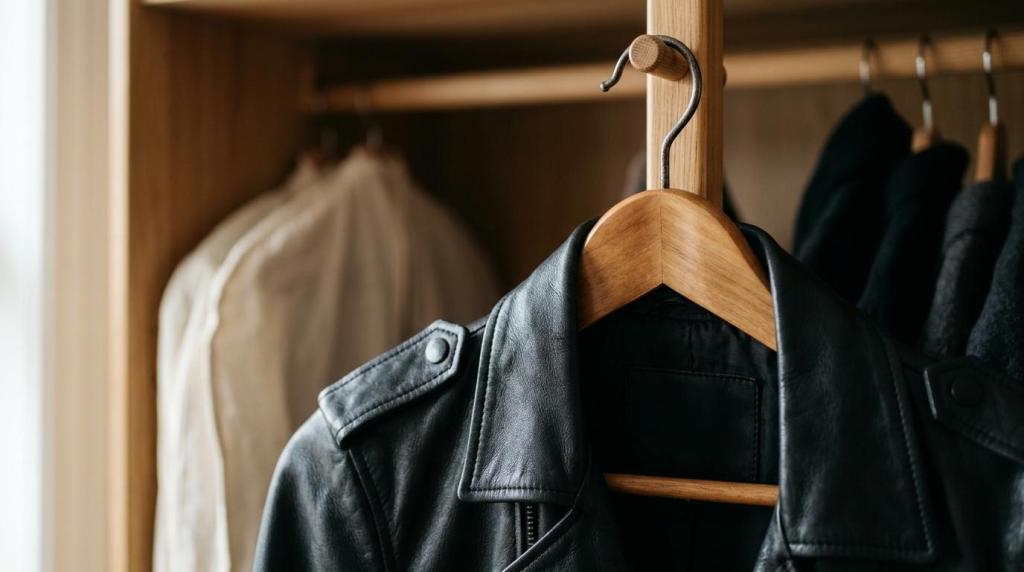


A leather jacket Leather often looks better over time, but only if it gets the right care. Leather is a natural material and it reacts to rain, heat, sun, sweat and improper storage far more than many realise.
The good thing is that care doesn't have to be difficult. With a few regular routines, you can keep your jacket soft, beautiful and usable for many years. This applies to both the classic smooth leather jacket and the more delicate suede model.
Leather jacket care starts with the right habits
A lot of damage to leather jackets doesn't happen all at once. They happen quietly, when dust is allowed to settle, when moisture is not allowed to dry properly or when the jacket is stuck inside a plastic bag. That's why good care is first and foremost about everyday habits.
After use, it's a good idea to give the jacket some air. If you've worn it in the rain or if it has collected moisture at the collar and under the arms, hang it freely on a hanger until it is completely dry. Not in front of a radiator and not in direct sunlight.
If you want to get one thing right from the start, don't treat a leather jacket like a regular fabric jacket. Leather doesn't tolerate the same kind of washing and rough cleaning can leave the surface dry, stiff or scaly.
- Washing machine
- Regular soap and plenty of water
- Hard scrubbing with a coarse sponge
- Drying on radiators or underfloor heating
- Long-term storage in plastic
Cleaning a leather jacket requires a gentle hand
When a leather jacket gets dirty, the best solution is rarely a big clean. Start small. Wipe the surface lightly with a soft, slightly damp cloth and remove dust and loose dirt before it sticks. Use only a little moisture and let the jacket dry completely afterwards.
For more thorough cleaning, you should use a cleaner made for leather. This is especially true for smooth leather. Here, a mild specialised cleaner can help remove surface dirt without drying out the material. Suede needs to be treated differently and is best treated with a special brush or cleaning eraser made for this type of surface.
It's also worth taking the label seriously. Many leather jackets are labelled with a “dry clean” label. When it's written on the jacket, it means that it should be taken to a professional dry cleaner with experience in leather. This is especially relevant for grease stains, strong odours, discolouration or dirt that has soaked into the leather.
At Birger's the recommendation is simple: if the jacket is labelled “dry clean”, avoid home laundering and choose a dry cleaner with knowledge of leather. It's the safe way to keep the jacket's shape, colour and suppleness.
Leather jacket waterproofing protects against rain and dirt
Waterproofing is not just something you give outerwear for winter use. A leather jacket also benefits greatly because the impregnation adds a protective surface that helps protect against moisture and dirt. Water droplets find it harder to penetrate and the surface becomes easier to keep clean.
This does not mean that the jacket will be waterproof. A leather jacket should still be treated with care in heavy rain. But a good waterproofing treatment can reduce the risk of stains, stains and drying out because the leather doesn't absorb moisture in the same way.
On smooth leather, you can typically use a waterproofing spray designed for leather and, if needed, supplement with leather conditioner a couple of times a year. For suede, choose a spray made for suede or nubuck. Do not use grease or conditioner here as it can ruin the open, matt surface.
A simple routine might look like this:
- Make sure the jacket is clean and completely dry.
- Test the product in a discreet area first.
- Spray in an even layer with appropriate spacing.
- Allow the jacket to dry slowly before using or putting it away.
If you use your jacket often in autumn and winter, it may be a good idea to waterproof before the season and again later if you notice that the surface no longer repels moisture very well.
Smooth leather and suede require different leather jacket care
This is where many people go wrong. Leather is not just leather. Smooth leather and suede react differently to cleaning, care and waterproofing, and the wrong treatment can be difficult to correct afterwards.
Smooth leather is more tolerant and can usually handle a mild leather conditioner to keep the material supple. Suede is more delicate and should be cared for dry and light. You should think of suede as a surface to be brushed and protected, not saturated with conditioners.
| Type of care | Smooth leather | Suede/Nubuck |
|---|---|---|
| Daily cleaning | Soft cloth, slightly damp when needed | Suede brush or cleaning rubber |
| Deeper cleaning | Specialised cleaner for leather | Suede cleaner for suede |
| Impregnation | Spray for smooth leather, optionally wax or conditioner as needed | Spray only for suede/nubuck |
| Care balm | Yes, 1 to 2 times a year | No, you can't. |
| Risk of improper care | Drying out, discolouration | Flat, greasy or dark surface |
If in doubt about the type, look at the surface. Smooth leather is even and more closed, while suede has a soft, slightly nubby texture. If the jacket feels matt and “brushable”, you should generally keep greasy products far away.
Store your leather jacket without creases, moisture and discolouration
When the season ends, storage is just as important as cleaning and waterproofing. A leather jacket should hang, not fold. If it's squeezed for a long time, you can get creases that permanently embed themselves in the leather.
Use a wide brace, preferably wooden or padded, to keep your shoulders in shape. Narrow metal hangers are a bad idea as they can pull on the material and cause crooked shoulders. The locker should be dry, cool and out of strong sunlight.
A breathable cover is also a good investment. Cotton or other fabric bag protects against dust, but also allows the leather to breathe. Plastic is the one to avoid. It can retain moisture and make the leather stiff or cause bad odours over time.
When putting your jacket away for a longer period of time, always make sure it's completely dry and clean first. Dirt and moisture are a bad combination, especially if the jacket is going to hang unused for months.
- Hanger: choose a wide wooden hanger or a padded model
- Covers: use cotton bag or other breathable fabric
- Location: Dry cabinet without direct sunlight and without large temperature changes
- Plastic: Avoid tight bags and tight-fitting plastic covers
- Control: Check the jacket a few times during the season
If you have problems with moisture in the closet, small moisture-absorbing bags can help. And if you want to take extra care of your jacket, you can let it air out a few times during the storage period.
Daily maintenance of your leather jacket makes it easier to keep it looking great
It's not the big treatments that make all the difference. It's the little things you do on an ongoing basis. A leather jacket that is kept clean and dry in everyday life requires less dry cleaning, less restoration and fewer emergency interventions later.
Wipe away small stains immediately. Brush suede lightly if the surface looks tired. Hang the jacket properly after use. It sounds simple, and it is.
At the same time, it's smart to pay attention to how the jacket is used. If you often carry a bag with a rough strap over your shoulder, that area will wear out faster. If you drive a lot, your back and elbows can get extra pressure. If you see early signs of wear and tear, it's better to act quickly than wait.
Here are some good everyday routines:
- After rain: Let the jacket dry naturally on a hanger
- After many hours of use: Air it before it goes back in the cupboard
- For dust and fluff: use soft brush or lint roller very gently
- Before the change of season: check if it needs waterproofing or professional cleaning
When professional leather jacket cleaning is the right choice
Some problems you should not try to solve yourself. These include grease stains, heavy stains, mould odours, colour bleeding and large areas of dirt. Here, an experienced leather dry cleaner can often do more than home remedies can.
The same applies if the jacket feels dry and stiff after getting wet or if it has been stored incorrectly for a long time. In many cases, professional treatment can save both appearance and flexibility before the damage becomes permanent.
A good rule of thumb is simple: you can take care of light maintenance yourself, but when the label says “dry clean” or when the problem goes deeper than just surface dirt, it's best to leave the job to professionals. It gives you peace of mind and a much better chance of keeping your leather jacket looking great season after season.
Facebook
WhatsApp
Twitter
LinkedIn
Pinterest
Latest posts

Big & Tall: What does it mean - and what size is right for you?
22 December 2025
No Comments

Everyday style guide: 7 outfits for plus size men
24 December 2025
No Comments

Jeans and chinos in 8XL: How to choose the right model
30 December 2025
No Comments

Shirts for big men: materials, cuts and comfort explained
2. January 2026
No Comments
Underwear for plus sizes: Comfort without compromising on support
8. January 2026
No Comments
