
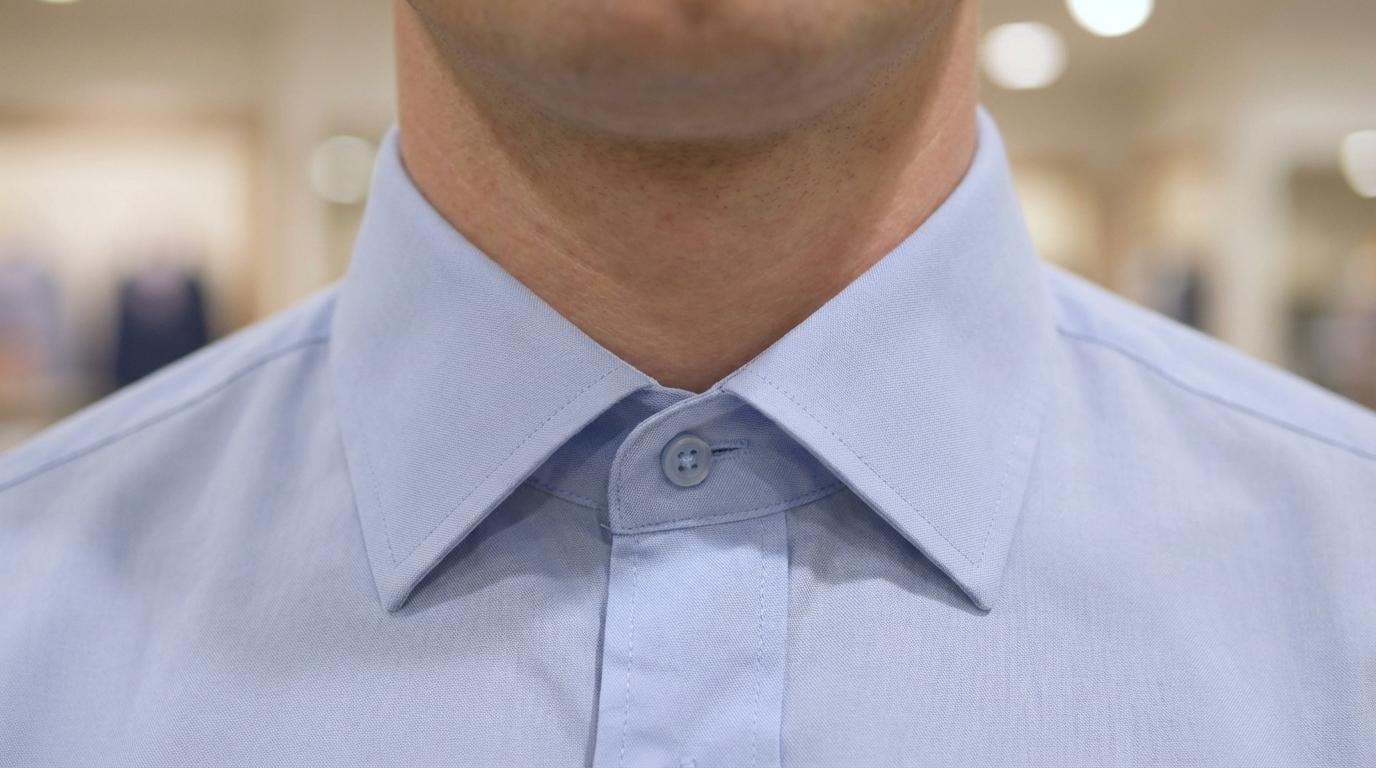


There’s something almost unfair about shirt collars: they’re only a few centimetres wide, yet they dictate how your entire face and upper body are perceived. The right collar can make you look sharper, slimmer or more balanced. The wrong one can make your neck appear shorter, your shoulders narrower or your tie knot clunky.
If you’ve ever wondered, “Why does this shirt look different on me than it does in the photo?”, the collar is often part of the answer.
Why the collar is more important than you might think
The collar frames the face. It’s not just about style, but about proportions: how open it looks at the neck, how wide it flares out towards the shoulders, and how pointed or soft it tapers down towards the chest.
At the same time, the collar is one of those areas where comfort and style come together. If it’s too tight, you’ll find yourself fiddling with it all day. If it’s too loose, it can look baggy, especially when you’re moving around or if you’re wearing a tie.
And yes, you can certainly have two “proper” collars, depending on whether you’re wearing a tie, a blazer, a jumper or an unbuttoned shirt.
Start with the fit: neck measurement, shoulder width and length
Before you start thinking about face shape and style, you need to get the basics right: size and fit. A collar may be beautifully shaped, but if the shirt pulls at the nape of the neck or gapes at the neckline, it will never look quite right.
The secret to getting the neck measurement right is simple: measure where the collar sits, leaving enough room for one finger under the tape measure. That way, you’ll end up with a collar that’s comfortable to wear without looking too loose.
Shoulder width is the next key factor. If you have broad shoulders, a very small collar can end up looking as though it “disappears” in the overall proportions. Conversely, a striking, wide collar can look overpowering on a narrow upper body. And if you’re tall or wear tall sizes, your height also comes into play: when the shirt fits properly on your upper body, the collar typically sits better.
These are the three goals that will give you the greatest certainty before you start getting bogged down in the details:
- Neck circumference
- Shoulder width
- Chest measurement
- Sleeve length
- Shirt length (especially for tall men)
Face shape: a quick check in the mirror
Once the fit is right, you can use the collar to balance your face. The idea is simple: narrow, pointed collars “lengthen” the face visually, whilst wide, open collars add width.
Round face? A more pointed collar often helps here, as it creates a vertical line running downwards. Square face? The same often applies: a slightly longer collar creates a softer look. If you have an oblong face, a wider collar can create balance, so that your face doesn’t appear even longer.
An oval face is a blessing because it suits almost anything. This means you have greater freedom to choose according to the occasion and your personal style.
The length of the neck interacts with the face. A short neck often looks best with a collar that isn’t too high and doesn’t close in too much. A long neck can cope with more height and more structure without looking “long”.
Here is a handy overview that you can use as a guide:
| Your situation | Collars that often look good | Collar styles you should be careful with |
|---|---|---|
| Round face | Kent/point, button-down (more pointed) | A very wide cutaway that makes the face appear wider |
| Square face | Kent/point, button-down | Extremely wide collars, if you also have a wide jaw |
| Oval face | Cutaway, wide spread | A very narrow ribbed collar that extends even further |
| Short neck | Kent (medium), button-down (soft) | Very high/stiff collar, very closed-off look |
| Long neck | Wide spread, cutaway, higher collars | A very small collar, which may appear “too small” |
| Very broad shoulders | Cutaway, wide spread | Small, narrow collars that look small in relation to the upper body |
| Narrow shoulders | Kent/moderate-sized points | A very wide collar that can “swallow” the upper body |
Classic collars and who they suit
There are many variations, but most shirts falls into one of the classic collar categories. Once you’re familiar with them, it becomes much easier to choose online, because the product images and names suddenly make sense.
Kent/point is the reliable all-rounder. Cutaway is the open, modern collar that shows more of the tie knot and more of the neck. Wide spread leans towards Italian style with a broad, understated look. Button-down is relaxed and stable, as the points are held in place.
If you want a quick “what’s right for me?” checklist, think of it this way:
- Kent/points: For those of you who want a classic, slimming look – often particularly flattering for round and square faces
- Cutaway: For those with an oblong face, broader shoulders, or for suits with a prominent tie knot
- Wide spread: For those of you who want width, but with a softer look than a cutaway
- Button-down: For those of you who dress mostly casually, want to avoid flying flips, and rarely wear a tie
- Mandarin/standing: For those of you who want a clean, modern look without a tie
- Wing: For very formal outfits (tuxedos), where the collar is part of the dress code
The important thing is that “the right collar” isn’t always the same for everyday wear and for special occasions. Many people end up with two favourites: one for wearing with a tie and one for wearing without.
Tie or open collar? It makes more of a difference than you might think
When you wear a tie, the width of the collar comes into play in a different way. A narrow collar spread typically suits a smaller tie knot, whilst a wide collar often requires a larger knot to look balanced. Otherwise, it may look as though the tie knot “disappears” into the opening.
If you’re not wearing a tie, it’s more a question of how the collar looks when it’s open. A very stiff and wide collar can look a bit harsh if you’re wearing your shirt unbuttoned and no blazer. In this case, a moderate Kent or a button-down collar might look more understated.
The collar is also affected by what you’re wearing on top. A blazer, the jacket visually “holds” the collar in place. Wearing a jumper over a shirt often requires a collar that lies flat and doesn’t bulge, and in this case the fabric and the collar lining are just as important as the cut itself.
Material and structure: this is why two collars do not feel the same
Two shirts may have the same collar shape on paper and still behave differently. A collar made from a heavier Oxford or twill fabric often retains its shape better throughout the day. A lighter poplin may feel more airy, but may also drape more softly, especially if the collar lining is lightweight.
If you find that the collar is “curling” or tilting, this is often due to a combination of:
- 1) the fabric in the collar is too soft, 2) the neck size doesn’t quite fit, or 3) the shirt is too tight across the chest and shoulders, so it pulls at the neck.
That is also why fit and cut are particularly important when wearing plus sizes or have a thicker neck. When there is plenty of room in the upper body, the collar can sit more loosely and neatly.
Common challenges with plus sizes and figures, and what you can do about them
Many men who wear sizes M–8XL or number sizes find that the “right” neck size does not automatically result in the right overall fit. If the shirt is too narrow across the chest, the collar may feel tighter, even if the measurement is correct, because the fabric pulls at the back. And if the shirt is too short, it can ride up, making the collar look untidy.
This is where fit and range make all the difference. A menswear shop specialising in large sizes and there are often several necklines to choose from, so you don’t have to compromise on either the neckline or comfort. At Birger's We currently stock sizes from M to 8XL and LT to 6XLT, and this range makes it easier to find a shirt that fits properly all the way round, not just at the collar.
When you shop online, … it’s a real advantage to have peace of mind throughout the process: fast delivery in Denmark, free delivery above a certain amount, a generous returns policy and the chance to find great bargains in the outlet. This gives you the peace of mind to order two different collar styles and choose the one that works best in practice at home in front of the mirror, with the shoes and jacket you actually wear.
Here’s a simple way to check the collar when you’re trying on the shirt:
- Fasten the top button and take a deep breath. You should be able to do this without tensing your neck.
- Turn your head from side to side. The collar can move slightly with it, but it shouldn’t feel tight.
- Take a look at the collar points. Are they lying flat, or are they sticking up?
- Have a go with what you usually wear: a blazer, jumper or jacket.
- Check the overall fit from the side. If the shirt pulls at the back, the cut is often too tight across the back and chest.
Small choices that make a big difference when you’re standing in front of the wardrobe
Some days you just want to look smart without giving it a second thought. On days like that, it can help to have a “go-to” option ready: a good-quality Kent/point is rarely a bad choice.
When you want to look particularly sharp, you can make more of the collar. If you have broader shoulders and want to emphasise them, choose a more open collar. If you want to make your face look slimmer, choose a collar with a more pronounced point. And if you’re not wearing a tie, choose a collar that still looks smart when it’s open.
If you’d like some help getting it right, it’s often enough to provide three pieces of information: your neck measurement, a photo showing your face shape, and whether you usually wear a tie. We can then quickly point you in the direction of the collars that will suit you best, and the shirt styles that ensure the collar stays in place all day long.
Facebook
WhatsApp
Twitter
LinkedIn
Pinterest
Latest posts

Big & Tall: What does it mean - and what size is right for you?
22 December 2025
No Comments
Everyday style guide: 7 outfits for plus size men
24 December 2025
No Comments

Jeans and chinos in 8XL: How to choose the right model
30 December 2025
No Comments

Shirts for big men: materials, cuts and comfort explained
2. January 2026
No Comments
Underwear for plus sizes: Comfort without compromising on support
8. January 2026
No Comments
