
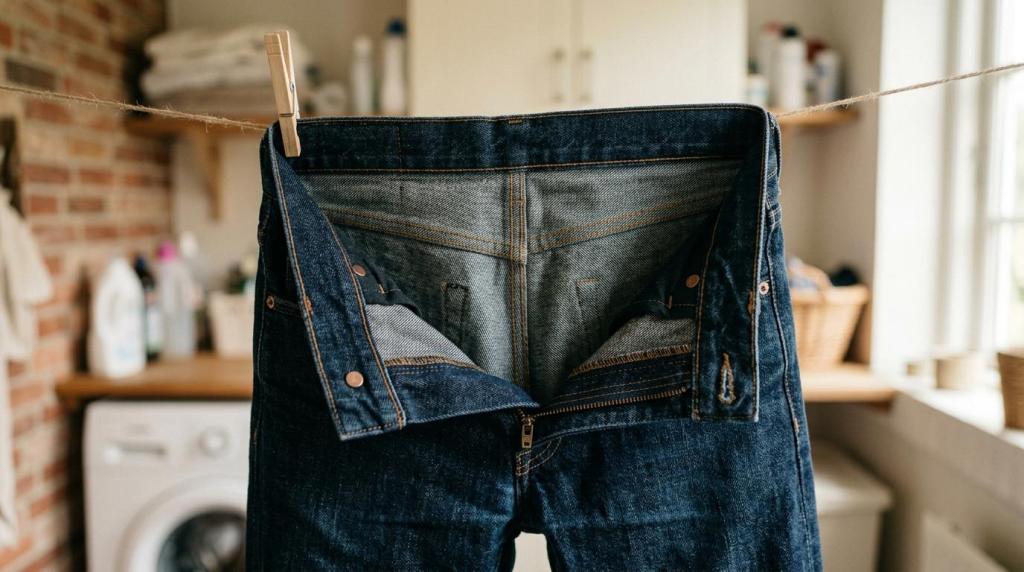


Jeans are some of the most frequently worn items in your wardrobe, which is precisely why they are often washed a little too vigorously. This is particularly true of dark jeans and stretch jeans, where the colour, shape and comfort can all change rapidly if the wash is too hot or too vigorous.
Many people simply ask: How do you wash jeans properly? The short answer is that you’ll get on just fine by washing them less often, using cold water, turning them inside out and air-drying them. The slightly longer answer is that the material and fit means more than many people realise.
For men who use plus-size jeans, there is also a practical side to the matter. The care label itself is usually no different from that for standard sizes, but the strain on inner thigh, knees, waistband and stretch fibres can be greater in everyday life. That’s why it makes all the more sense to wash gently.
How to wash jeans and preserve their colour and fit
If you want your jeans to stay looking their best for as long as possible, it’s a good idea to keep washing them simple and gentle. Denim is best kept free from unnecessary wear and tear as much as possible, and a lot of that wear and tear actually happens in the washing machine.
The safest procedure is as follows:
- Do up the zip and button.
- Turn the jeans inside out.
- Wash them with similar colours.
- Use cold water or a low temperature.
- Select the gentle wash programme.
- Use a small amount of mild detergent.
- Take them out straight away after washing and leave them to air-dry.
This method works for most jeans, whether they are classic cotton jeans or stretch denim. It reduces the risk of fading, shrinkage and what many people experience as baggy knees or a loose waistband.
A good tip to remember is simple: the gentler the wash, the longer jeans tend to last, both in terms of their appearance and their fit.
How often should jeans be washed in practice?
Jeans rarely need washing after just one day’s wear. On the contrary, they often look their best when you let them be worn several times between washes. Do air them out after wearing, especially if they aren’t visibly dirty.
For many people, washing them after 5 to 10 wears will be sufficient, but this obviously depends on how the jeans are used. Work, hot days, cycling and long car journeys can cause more wear and moisture than normal office wear.
Sometimes a quick vent is enough.
If you’re in any doubt, look out for these signs:
- Smell: The jeans no longer smell fresh, even after being aired out.
- Stains: There is visible dirt, food stains or marks that should be removed.
- Form: The fabric feels heavy, limp or loses its usual elasticity.
- Comfort and convenience: They feel sticky or rather unpleasant against the skin.
This approach is also a good idea if you want to take better care of dark blue or black denim, which tends to fade easily with frequent washing.
Washing large-sized jeans requires a little more care
There is no strong evidence to suggest that large-sized jeans generally have very specific official washing instructions. The care label usually depends on the fabric, not the size.
Nevertheless, there is a real difference in practice. Jeans in large sizes are often subjected to greater friction at the inner thighs, knees and waistband. If the trousers are also very tight-fitting, the seams and stretch fibres can become worn more quickly. This is one of the reasons why gentle washing makes particular sense in this case.
This applies particularly to stretch jeans. As the fabric needs to provide freedom of movement whilst retaining its shape, it does not fare well with high heat, vigorous spinning and frequent tumble drying. Large jeans also become heavier when wet, and this can affect their shape if they are left hanging for a long time without support.
Another important point is the fit before washing. If a pair of jeans is already too tight, they will typically start to wear out and stretch more quickly, particularly on the inner thighs and around the zip or seams.
Choosing the temperature, detergent and programme for denim
The temperature is one of the most important choices. Many pairs of jeans can withstand 40 degrees according to the label, but that doesn’t mean 40 degrees is best if the aim is to preserve the colour and fit for as long as possible. A permitted temperature and a gentle temperature are not always the same thing.
For most jeans, cold water or 30 degrees is a safe choice. This applies particularly to dark denim and jeans containing elastane. Combined with a gentle cycle and a mild detergent, this will result in a wash that is much gentler on the fabric.
| Type of jeans | Ideal temperature | Laundry detergent | Programme | Drying |
|---|---|---|---|---|
| Dark blue or black denim | Cold water or 30° | Gentle detergent for dark colours | Spare Programme | Air-dry away from direct sunlight |
| 100% cotton jeans | Cold water or 30° | Mild liquid washing-up liquid | Gentle cycle or quick wash | Air-dried |
| Stretch jeans with elastane | Cold water | Mild detergent without bleach | Delicate cycle with gentle spin | Air-dry, preferably without using a tumble dryer |
| Light-coloured jeans | 30° | Mild detergent | Spare Programme | Air-dried |
Liquid washing powder is often a good choice for denim, as it dissolves easily and is gentler on dark colours. Fabric conditioner is rarely necessary and is often best left out, particularly with stretch jeans.
If the machine is overloaded, friction between the clothes increases. This can lead to deep creases, increased wear and tear, and the clothes losing their shape more quickly. Jeans are best left with a little space around them.
How to dry jeans properly after washing
Drying is almost as important as the wash itself. Many lovely pairs of jeans lose their shape because they are dried at too high a temperature or are left hanging wet and heavy for too long.
Air-drying is the gentlest option. Take the jeans out as soon as the cycle has finished, give them a gentle shake, smooth out the legs and shape them with your hands. This helps the fabric return to its proper shape whilst it is still damp.
Good drying habits can be very simple:
- Hang them up so there’s plenty of space around them
- Avoid direct sunlight on dark denim
- Straighten the waistband, pockets and legs with your hands
- Do not use a high heat setting in the tumble dryer
- Don’t leave jeans wet in the washing machine
If you absolutely must use a tumble dryer, you should only do so for a short time on a very low heat setting, and only if the care label permits it. For stretch jeans, this is still the option you should use as little as possible.
The difference between 100% cotton jeans and stretch jeans
Not all jeans react in the same way to washing. This is particularly noticeable when you compare classic cotton denim with stretch denim.
100% cotton jeans can often withstand a bit more wear and tear in everyday use, but they are more prone to shrinking and losing colour if washed at high temperatures or frequently. They may also feel stiffer after air-drying, which is perfectly normal. This stiffness usually disappears again once you put them on.
Stretch jeans are often more comfortable right from the start, but they do require a little more care. Elastane and other stretch fibres fare best at low temperatures, with a gentle spin cycle and as little heat as possible. Otherwise, the elasticity may deteriorate over time, and the knees or seat may start to sag more.
This is also where plus-size jeans deserve a bit of extra attention. Many people opt for stretch fabrics for comfort, and that’s a good choice. But that’s precisely why it’s worth washing them with care, so that they stay comfortable for longer.
Common mistakes when washing jeans
Most mistakes are very common and easy to make. Jeans end up in the washing machine with the rest of the laundry, are washed on a standard cycle at a high temperature, and may well end up in the tumble dryer afterwards. It’s easy, but not particularly kind to denim.
Another common mistake is washing them too often. When jeans are washed after only a short time, they lose some of the look and shape that make them so comfortable to wear more quickly. Dark jeans, in particular, lose their lustre quickly.
The most common mistakes are often the following:
- For a warm wash: Increases the risk of fading and shrinkage.
- Excessive spin speed: It wears out more quickly at the seams, knees and stretch fibres.
- Overloaded machine: Causes more friction and results in a less gentle wash.
- Incorrect drying: High heat or heavy hanging can stretch the shape.
- Too much washing powder: This can make the fabric stiffer and more difficult to rinse out.
So if your jeans lose their shape quickly, it isn’t always the quality itself that’s the problem. Your washing routine can be just as important.
When fit and care go hand in hand
A pair of jeans lasts best when the size, material and wash are all the right match. Jeans that fit properly from the start are subjected to less wear and tear in everyday life. This is particularly true of the inner thighs, waistband and knees, where signs of wear usually first become apparent.
If you have several pairs of jeans in rotation, it’ll also be easier to wash them less often. This can be a big advantage if you wear jeans every day and want to keep both the colour and the fit looking good for as long as possible.
The good news is that looking after them properly isn’t difficult. Turn them inside out, wash them in cool water, choose a gentle cycle and let them dry away from direct heat. This is still the safest way to care for jeans, whether you’re wearing classic denim or stretch jeans in larger sizes.
Facebook
WhatsApp
Twitter
LinkedIn
Pinterest
Latest posts

Big & Tall: What does it mean - and what size is right for you?
22 December 2025
No Comments

Everyday style guide: 7 outfits for plus size men
24 December 2025
No Comments

Jeans and chinos in 8XL: How to choose the right model
30 December 2025
No Comments

Shirts for big men: materials, cuts and comfort explained
2. January 2026
No Comments
Underwear for plus sizes: Comfort without compromising on support
8. January 2026
No Comments
