


A wardrobe for all seasons: What should your plus-size wardrobe essentials include?
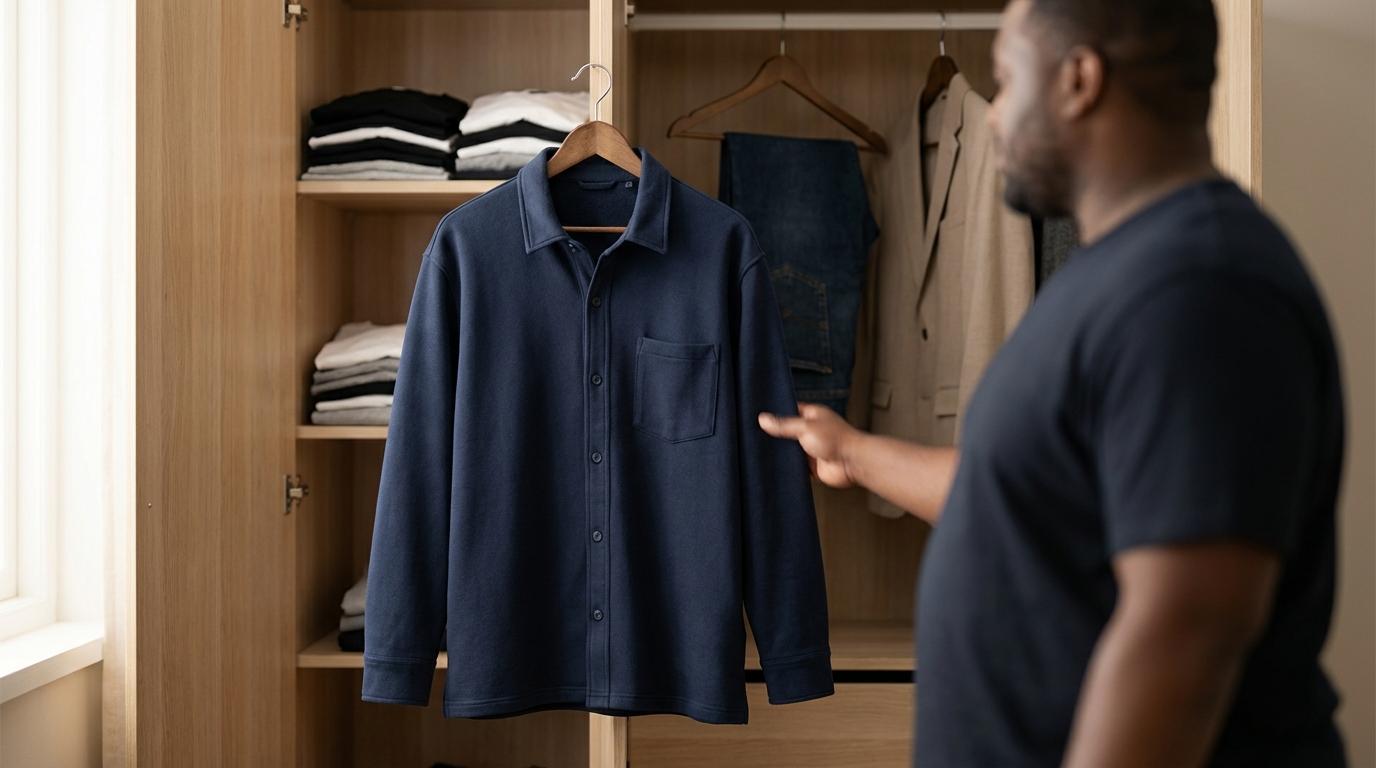
Building a basic wardrobe as a plus-size man isn’t about buying more clothes. It’s about buying the right clothes, in the right lengths, made from durable materials, and with a fit which means you can just slip it on without giving it a second thought. Once you’ve got the basics sorted, it suddenly becomes easy to put together an outfit for work, the weekend, a party or a holiday – even when the seasons change within a single week.
A good basic wardrobe from North Latitude should be able to withstand everyday wear, be versatile enough to dress up, and feel comfortable to wear. And it should be available in sizes where many standard collections are too short at the back, too narrow over the thighs or too tight around the tummy.
Think of the basics as a system, not as individual parts
The basic wardrobe from Casa Moda works best when you think of it as a small “system” of pieces that go together. One pair jeans should go with several tops. One shirt It should be versatile enough to be worn either open as an extra layer or buttoned up for a smart look. And a jumper should go well with both dark trousers and jeans.
This is particularly advantageous in plus sizes, because you quickly notice the difference between clothes that only work in one situation and clothes that are versatile. Once a favourite fits just right, you’ll want to be able to recreate that feeling in several different outfits.
Here’s a simple rule of thumb: if you can choose a top and a bottom without giving it a second thought, and it still looks put-together, then you’ve got it right.
Colours that make everyday life easier
Neutral colours aren’t boring. They’re practical. Black, navy, grey, white and beige are easy to mix and match, and they work in every season. When your base is neutral, you can add a touch of personality one colour at a time: a shirt in a dusty green, a jumper in burgundy, a T-shirt with a subtle print.
It also brings a sense of calm to your wardrobe. You’ll have fewer “what goes with this?” moments, and you’ll get more out of every purchase.
A rule of thumb that often works: Choose two base colours (e.g. navy and grey) and one accent colour that you like. Repeat these colours across T-shirts, shirts and knitwear.
Plus-size fit: the little things that make all the difference
Fit is more than just the size on the label; Compass Classic gets it right with the shoulder seam, which has to sit just right. The sleeve length, which mustn’t ride up. The room over the stomach, which needs to be there without the whole thing looking like a tent.
For many plus-size men, two areas are particularly important:
- Thighs and seat: Stretch fabric and a cut that allows for room make a huge difference in trousers and jeans.
- Lengths: “Tall” lengths or extra body length in tops can be crucial if you’re tall, have a long torso, or simply want to avoid your T-shirt riding up when you move.
Also look for fabrics that work with your body. Cotton with a little elastane, jersey, modal and knitted blends can feel more comfortable, without the clothes losing their shape after a few hours.
The key building blocks of a plus-size wardrobe essentials collection
When it comes to a basic wardrobe, it’s tempting to draw up a huge list. You don’t need to do that. You just need the pieces that form the “backbone” of your outfits.
It’s better to start with a few strong choices and build on them once you get a feel for what you wear most. Many people find success by choosing high-quality basics from reliable brands with well-thought-out sizing, such as stretch jeans (as seen in several Sunwill collections), shirts with a good body length (e.g. Casa Moda) and overshirts, which can be worn as both a shirt and a light jacket (e.g. Compass Classic).
When you want to put this into practice, aim for this core principle:
- Basic T-shirts: 2 to 4 items made of good-quality cotton, preferably in black, white and navy
- Shirts: 1 white or light blue for smart occasions, 1 more casual pair in Oxford or twill
- Overshirt: Versatile layer: can be worn as a jacket in spring and autumn and as a mid-layer in winter
- Stretch jeans: Everyday anchors: dark denim or black, so they can also be worn “smartly”
- Black or navy trousers: A better choice: preferably with a comfortable fit at the waist and a bit of stretch in the fabric
- Jumper or sweatshirt: 1 thin one and 1 thick one, so you can mix it up
- Blazer or smart jacket: for those days when you want to look sharp without looking too stiff
- Underwear and socks: Quality that’s close to the customer pays off quickly, for example with JBS and Egtved-type basic goods
Please note that you don’t need to buy everything in one go. Start by choosing trousers and jeans, as they largely determine the rest of your outfit.
The Seasons: the same foundation, new layers
The great thing about a basic wardrobe is that you don’t have to replace it four times a year. You simply vary the choice of fabrics and the way you layer upon layer style it.
Below is a simple overview of how these key elements can operate throughout the year.
| Share | Spring | Summer | Autumn | Winter |
|---|---|---|---|---|
| Cotton T-shirt | On its own on warm days, otherwise worn under a top | On their own, possibly with shorts | To wear under a shirt or jumper | Under a jumper as an extra layer |
| Shirt | Open-front T-shirt | Lightweight shirt with rolled-up sleeves | Closed under the knit | Under a jumper + a coat, if required |
| Overshirt | Outer layers for changeable weather | Evening wear for cool summer evenings | Fixed outer layer | Mid-layer under a winter jacket |
| Dark stretch jeans | Trainers and a light jacket | T-shirt + light shirt | Knitwear + boots | Knitwear + winter coat |
| Black/navy trousers | Looks smart in a shirt | A light shirt and loafers/trainers | Blazer or overshirt | Knitwear + a smart coat |
| Knit | Lightweight jumper over a T-shirt | Less often, mostly in the evening | Your best friend in everyday life | Warm jumper, possibly a roll-neck |
If you’re only going to do one thing this season: alternate between light and heavy outer layers. This will keep you comfortable without having to change your whole style.
Layers upon layers that don’t feel heavy
Layering can be brilliant for plus-size fashion, as it allows you to control proportions and create a more balanced silhouette. The secret is to vary the lengths and textures.
A thin base layer (T-shirt or undershirt), a suitable mid-layer (shirt, overshirt or thin jumper), and an outer layer as required. When each layer has its own function, you avoid that “bulky” feeling.
A little tip that often helps: keep the inner layer closer to your body and let the outer layer hang more loosely. That way, you can move freely without it feeling tight, and without everything looking too baggy.
Here are three simple styling tips that many people keep coming back to:
- Thin inner layer, thicker outer layer
- Subdued colours at the bottom, a bit more vibrancy at the top
- One distinct “main section” at a time
From everyday to smart in just a few minutes
There are days when you want to look like you’ve made an effort, without it taking too much time. A basic wardrobe can do just that, if you’ve got a few “upgrade pieces” to hand.
It could be a blazer, a smart overshirt, a good-quality jumper or a shirt that drapes nicely over the tummy. When the base is neutral, the added touch feels like a natural part of the outfit.
A concrete example: dark stretch jeans and a black T-shirt are a very common combination. Throw on a charcoal grey overshirt, and suddenly it looks well thought-out. Swap your trainers for a simpler pair of shoes, and you can wear the same outfit to dinner.
When shopping online: how to get it right first time
Shopping online for plus-size clothing can be really easy once you know your measurements and what you’re looking for in terms of fit. And it’s reassuring to know that there are online shops offering a wide range of sizes, fast delivery in Denmark (often 1 to 3 working days), free delivery above a low threshold and a generous returns policy. This makes it easier to order two sizes and choose the best one.
The biggest mistake many people make is choosing “the size I usually wear” without checking the measurements or lengths, especially if you’re switching brands.
Instead, do it like this, just this once, and save the note on your phone:
- Measure your waist and hips: stand relaxed, and measure without pulling the tape measure tight
- Measure your chest and waist: your chest at its widest point, your waist where it’s widest
- Check your leg length and torso length: this is particularly relevant if you’re using LT to 6XLT lengths
- Compare with the size guide: It’s better to look at the centimetres than at the letters
- Assess the fabric: more stretch can allow for more leeway, whilst stiff fabrics require greater precision
If you want to make it really simple, find one pair of trousers and one shirt that fit perfectly, and use them as a “reference” for all your new purchases.
A basic wardrobe that feels like you
The best basic wardrobe isn’t the most minimalist one. It’s the one you actually wear. Some people prefer a classic look in navy and grey, whilst others would rather have a coloured T-shirt or a shirt with a subtle pattern. Both can work, as long as the basics are in place.
If you’re not sure where to start, begin with trousers and very simple tops. Once you’ve got the fit right, the rest almost takes care of itself. And if you need some guidance on sizes, lengths or which items make the most sense to buy first, personalised advice in-store or online can often save you both time and avoid wasted purchases, especially when you’re building up your wardrobe with a few, well-considered purchases at a time.
Facebook
WhatsApp
Twitter
LinkedIn
Pinterest
Latest posts

Big & Tall: What does it mean - and what size is right for you?
22 December 2025
No Comments

Everyday style guide: 7 outfits for plus size men
24 December 2025
No Comments
Jeans and chinos in 8XL: How to choose the right model
30 December 2025
No Comments

Shirts for big men: materials, cuts and comfort explained
2. January 2026
No Comments
Underwear for plus sizes: Comfort without compromising on support
8. January 2026
No Comments
