
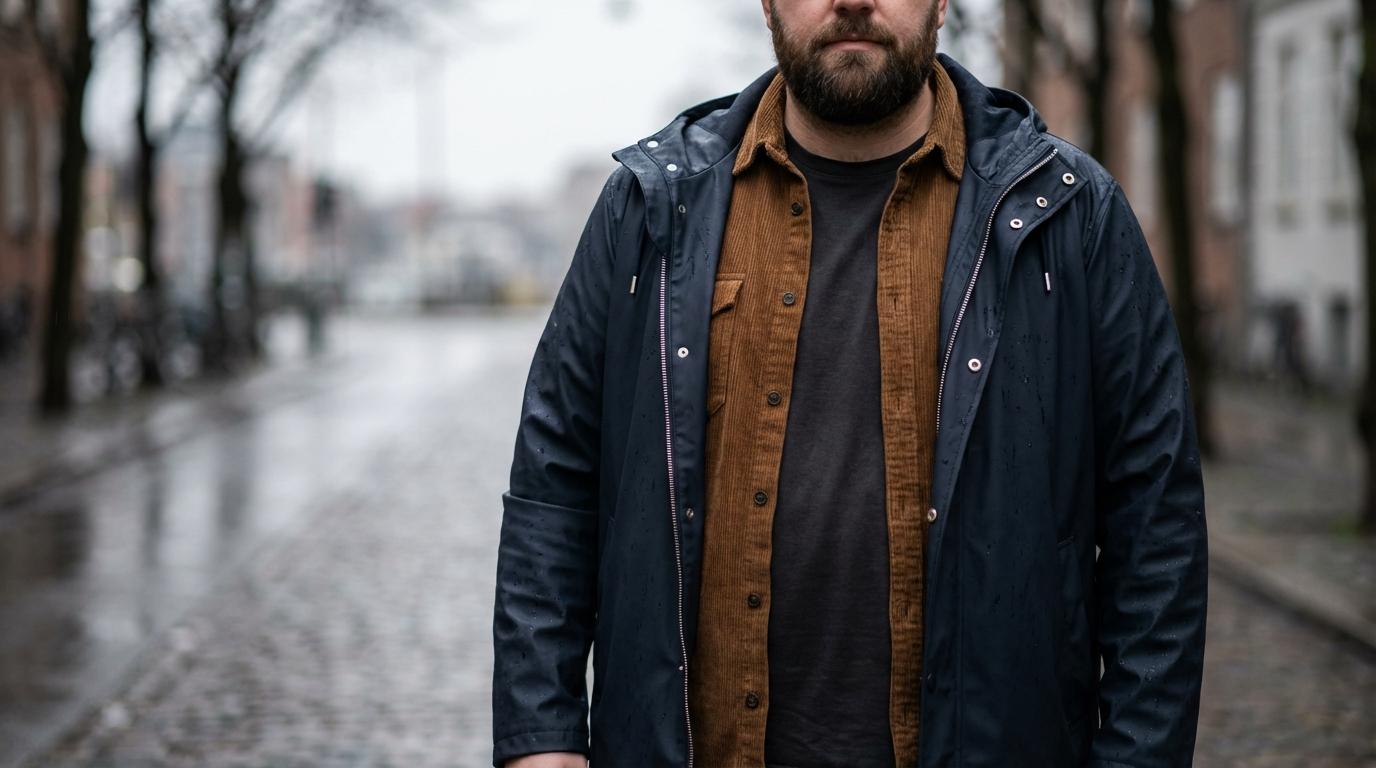


Layering is one of the easiest ways to strike a balance between comfort and style when you’re a larger man. It’s not about hiding your body away, but about giving your outfit a sense of calm, clean lines and balance, so you feel well-dressed without feeling swaddled.
At the same time, dressing in layers is practical in Denmark, where the weather changes throughout the day. If you put your outfit together properly, you can take a layer off, unbutton a shirt or change your jacket without the whole look falling apart.
Why layering often flatters a fuller figure
A well-constructed layered look creates distinct vertical lines: an open shirt, a cardigan, an overshirt or a jacket that falls neatly. This creates a more cohesive silhouette and makes the outfit look more “put together” rather than just baggy.
Layering can also draw attention to what you want to highlight: a flattering shoulder line, a smart collar, a well-chosen jumper or a structured jacket. When the outer layers have a bit of shape, the overall look appears more polished, even in casual wear.
And then there’s the comfort: A light base layer, which fits snugly against the body, can make a big difference when you’re moving around, sitting down or on the go all day.
The basic rule: thin on the inside, more texture on the outside
The best trick is simple: start with the thinnest layer on the inside, and gradually build up more “body” to your outfit as you go outwards. That way, you’ll avoid the layers bunching up, bulging or feeling stiff.
A good base layer is often a T-shirt, a Henley or a thin cotton shirt. On top, you can wear a jumper, a cardigan or an overshirt. To finish off, you can choose a jacket or coat that adds a bit of shape and length.
When you’re trying out different layers at home, check to see if any “bulges” appear around your stomach, under your arms or at your neck. This is almost always a sign that one layer is too thick, too long or doesn’t sit properly on your shoulders.
Materials that make layering easier and more comfortable
The choice of fabric matters more than many people realise, especially when wearing several layers. Heavy fabrics worn in layers can quickly feel warm and bulky, whilst lighter fabrics can provide the same warmth and a more flattering drape.
Cotton is a classic choice for base layers because it’s soft, breathable and feels lovely against the skin. Linen is brilliant on hot days because it feels light and cool, but you have to accept that it creases. A cotton blend with a little elastane can be a really good compromise when you want a bit of extra give across the bust, shoulders and tummy without the garment losing its shape.
Lightweight knitwear works well as a mid-layer, whether made from cotton or wool blends. In winter, a thin layer of wool next to the skin can provide warmth without taking up much space. And in the warmer months, technical, moisture-wicking fabrics or bamboo and modal blends can be a comfortable base layer, as they help the body to release heat.
Colours and patterns that create a sense of calm, depth and direction
Colours are a subtle yet powerful tool when used in layers. Neutral colours such as navy, charcoal grey, black and dark green are easy to combine and often create a more streamlined look. Lighter shades and bolder colours can certainly be used, but they work best when used sparingly.
If you want to wear patterns, think in terms of patterns that play with direction and scale. Vertical elements and smaller checks can add interest without making the outfit look cluttered, whilst large, wide stripes can take up a lot of visual space.
It helps to have a simple “plan” for the colours before you start building up the layers. Here’s one way to think about it:
- Neutral bases
- Dark on the outside: adds edge and ties the look together
- Lighter on the inside: gives a fresher look and adds a bit of contrast
- Pattern in the centre: A checked shirt or jumper can add depth without being too loud
Cuts and lengths: this is where layering looks its best
Layered fit It’s not about going down a size. It’s about each layer having a specific purpose.
The base layer should fit closer to the body so that it doesn’t bunch up under the other layers. It should feel comfortable and mustn’t feel tight across your stomach or chest when you move your arms. The middle layer can have a bit more room, but it should still follow the contours of your body, particularly at the shoulders and upper arms. The outer layer is where you can add structure and create that “flattering silhouette” that many people are looking for.
Length is very important for taller men. An overshirt or cardigan that ends just below the hips can create a flattering vertical line. If it stops halfway down your stomach, however, it can split your body in an unflattering place. The same goes for T-shirts: a good length means you won’t be spending the whole day adjusting your clothes.
One small detail that is often overlooked is the collar. A shirt collar worn under a jumper or an overshirt can “lift” the whole look and add more definition around the neck and face.
Season by season: teams that work in Denmark
When you dress in layers according to the season, it becomes much easier to dress appropriately, even when the weather changes.
| Season | Base layer | Mid-layer | Outer layer | Practical detail |
|---|---|---|---|---|
| Spring | Long-sleeved cotton T-shirt | Lightweight jumper or cardigan | Transitional jacket or overshirt | A light scarf for mornings and evenings |
| Summer | Lightweight T-shirt in cotton or linen | Open-fronted shirt in fine cotton/linen | Often nothing, or perhaps a light overshirt | Lightweight trainers and sunglasses |
| Autumn | T-shirt or cotton shirt | A jumper, a corduroy shirt or a heavier overshirt | Windproof and waterproof jacket | A hat and scarf in neutral colours |
| Winter | Lightweight wool or thermal base layer | Heavier-weight knitwear or fleece | Warm coat with room for layers | Gloves and a scarf that can be “fastened” at the neck |
Spring calls for flexibility. An open overshirt over a T-shirt is brilliant because you can quickly adjust the temperature simply by unbuttoning it or taking it off.
Summer layering is all about lightness. Many people think you can’t layer in hot weather, but an ultra-light, open-fronted shirt can actually provide some shade from the sun and give a more put-together look without feeling heavy.
Autumn is the season when texture really makes a difference: velvet, knitwear and checks can add warmth and character, whilst the outer layer keeps out the wind and rain.
Winter is when “layering” really pays off. A good base layer, plus a jumper and a coat, can be warmer than a single, very heavy jumper, and you’ll have greater freedom of movement.
Three outfit ideas you can wear time and time again
It’s nice to have a set framework; you can experiment with colours and materials. Once you’ve got a few tried-and-tested combinations, getting ready in the morning is a breeze.
Here is three recipes, which is suitable for many larger men and can be adjusted to fit both M–8XL and US sizes:
- Everyday life: T-shirt + open-fronted shirt + jeans
- Smart casual: shirt + thin jumper + overshirt
- To put it more formally: shirt + knitted waistcoat or a smart jumper + blazer or coat
Change one part at a time. If the fit is right, you can feel free to experiment with colours, collars, checks or a different style of jacket without having to start all over again.
Simple tips to reduce “bulk” without feeling the cold
There are a few classic areas where layering can end up feeling bulky: around the stomach, under the arms and around the neck. This is often where comfort is the first thing to go.
One simple trick is to keep the middle layer relatively smooth. A very chunky jumper worn under a close-fitting jacket can quickly feel like a straitjacket. It’s better to choose a jumper with a tighter knit and wear the chunky one on top as an outer layer if that’s the look you’re going for.
Another detail to consider is zips and buttons. An overshirt that can be left open creates a vertical line and makes it easy to regulate your body temperature. And if you tend to sweat easily, opt for base layers that wick away moisture, so you don’t end up feeling clammy under the other layers.
If you’re curvy or plus-size: focus on proportions
If you use number sizes (LT to 6XLT) or plus size (up to 8XL), layering can be particularly effective, as proportions are often what determine whether an outfit looks well-chosen.
Tall men typically need extra length in the sleeves and body so that their clothes don’t “ride up” during the day. Plus-size men often benefit from cuts that provide room in all the right places, particularly across the shoulders and stomach, whilst still maintaining the garment’s shape.
It might also be worth looking out for trousers with a bit of stretch and a flattering silhouette. When the bottoms fit well, the layers of the top look more harmonious, and you avoid the feeling that all the attention is drawn to your tummy.
Personalised support makes the layer-by-layer approach much easier
It’s difficult to judge layering by looking at just one jumper at a time. It’s the interplay between several items that determines whether it fits properly at the shoulders, whether the lengths are just right, and whether you can move freely.
At Birger's they are currently working on dressing men in sizes from M to 8XL as well as LT to 6XLT, both in-store in Christiansfeld and via webshop. Many people choose to start with a few reliable basics: a good T-shirt, a cotton shirt with a good length and a mid-layer that can be worn all year round. You can then build your look with overshirts, jumpers, trousers and jackets from quality brands, which are often available in larger sizes.
If you shop online, it’s nice to have your clothes delivered quickly and to have plenty of time to try out different combinations at your leisure. And if you’re the sort of person who likes to snap up a particularly good bargain, an outlet can also be a great way to try out new combinations without having to replace your entire wardrobe in one go.
Facebook
WhatsApp
Twitter
LinkedIn
Pinterest
Latest posts

Big & Tall: What does it mean - and what size is right for you?
22 December 2025
No Comments
Everyday style guide: 7 outfits for plus size men
24 December 2025
No Comments

Jeans and chinos in 8XL: How to choose the right model
30 December 2025
No Comments

Shirts for big men: materials, cuts and comfort explained
2. January 2026
No Comments
Underwear for plus sizes: Comfort without compromising on support
8. January 2026
No Comments
