
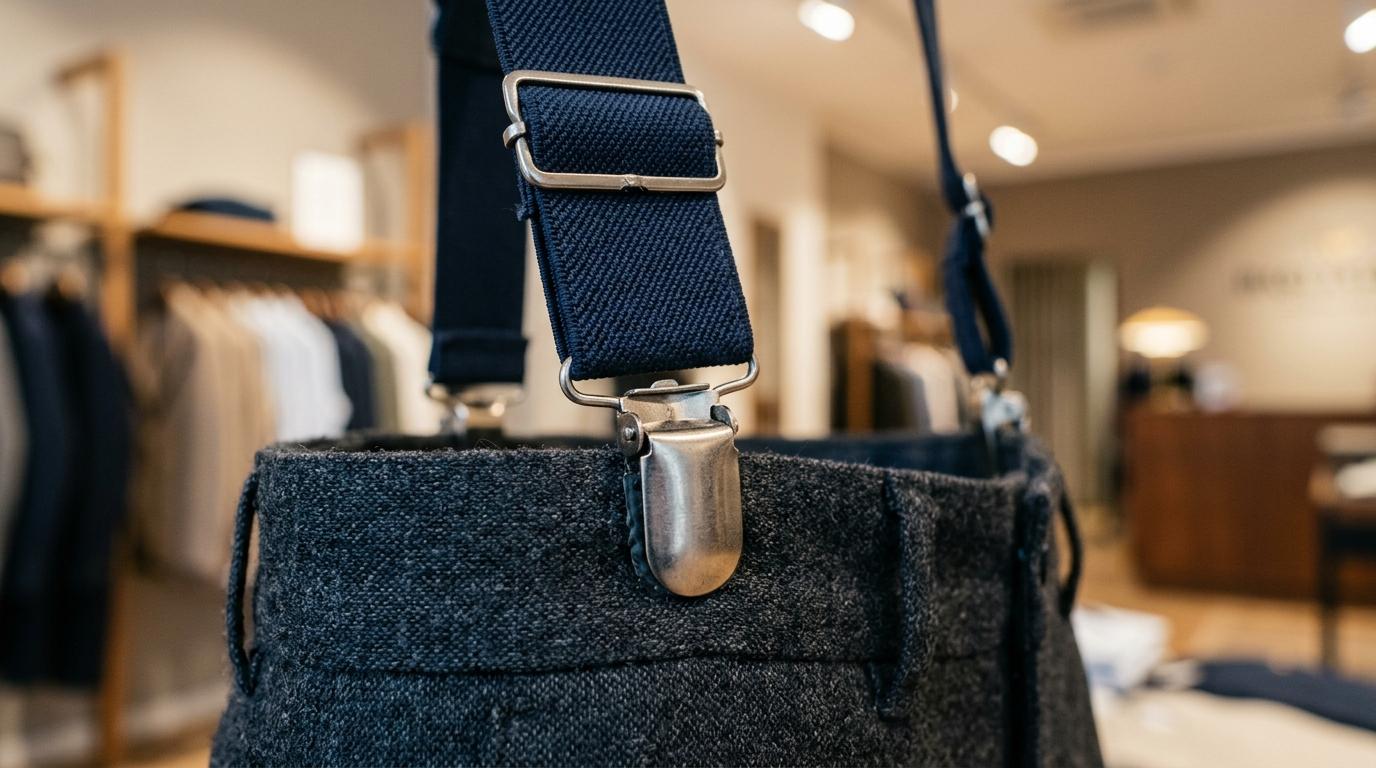


When you’ve got a bit of a tummy, the question of whether to wear a belt or braces isn’t just a matter of style. It’s very much about comfort, fit and ensuring your trousers stay in place all day. Many men are familiar with the feeling of a belt that’s too tight, creases or slips, especially when you’re switching between standing, walking and sitting.
There’s no one-size-fits-all solution here. Some people are happiest with a sturdy leather belt, whilst others find that large-sized braces make everyday life far more comfortable. The best solution depends on body shape, trouser style, the situation in which they’re worn and, not least, personal taste.
A belt or braces for a large tummy
If your tummy is wider than your hips, a classic belt can have a tough job. The trousers have to be held up around an area that changes shape when you move, sit down or bend over. This can cause pressure around the tummy, which some people find uncomfortable during the day.
Suspenders work differently. They lift the trousers from the shoulders rather than fastening round the waist. This means that the weight is distributed upwards, and you avoid that tight band across the middle of your body. For many men who wear plus-size fits, this feels more comfortable, especially during long working days or when spending many hours in the car.
The short answer is therefore often this: if your main priority is comfort around the waist, braces will often be the most comfortable option.
Advantages of large-size braces
Large-size braces have become popular for good reason. They help keep your trousers in place without you having to tighten them any further around your waist. This makes a big difference if your trousers otherwise tend to slip down at the front or back.
There is also a visual benefit. Suspenders create vertical lines on the upper body, which can make the silhouette appear longer and more balanced. A belt divides the body horizontally, which some men would prefer to avoid, especially if the belt is a striking colour or has a large buckle.
That doesn’t mean that braces are always the right choice. But if you often feel pressure on your stomach, or if you’re constantly having to adjust your trousers, braces are an obvious place to start.
- Less pressure on the stomach: The trousers stay up without being tight all the way round the waist
- Greater comfort when sitting down: Harnesses provide more space around the tummy at the table, in the car and at the office
- Secure fit: The trousers typically stay in a more consistent fit throughout the day
- A good solution for a large tummy and narrower hips: Here, belts may slip more easily or need to be tightened too much
When is a plus-size belt best?
A belt is still a really good option in many cases. Especially if your trousers already sit nicely over your hips and you just need a bit of support and a stylish finishing touch to your outfit. Many people also prefer a belt because it looks more understated with a shirt, jeans and a blazer.
A wide, good-quality belt can be very comfortable, provided it is the right size. The problem usually arises if the belt is too narrow, too short or too stiff. In that case, it is more likely to fold over, dig in or feel hard against your stomach.
Elasticated belts are often a good compromise. They stretch more as the day goes on and mould better to your body as you move. This can be a big advantage if you want the belt look but would prefer to avoid that tight feeling.
A belt is often most suitable for:
- jeans and chinos
- shirt without a jacket
- a more classic everyday look
- situations where you don’t want your braces to be visible
Fabrics and widths for comfort in plus sizes
When choosing between a belt and braces, the material is almost as important as the style itself. A sturdy full-grain leather belt is long-lasting and gives a classic look, but it also retains its shape better. It’s a good choice for men who want support and a sturdy look with jeans or smart trousers.
And braided elasticated belt offers something different. It gives you greater flexibility, more adjustment options and a fit that adapts to your body throughout the day. It’s often the belt you reach for when comfort is a slightly higher priority than a strictly formal look.
When it comes to braces, the width is crucial. Narrow braces may look good, but they do not distribute the weight as effectively as wider ones. Many larger men find that wide, adjustable braces work best for them, as they sit more comfortably across the shoulders and do not dig in.
The buckle or fastening mechanism is also important. When it comes to belts, many people opt for a classic buckle, whilst others prefer options that allow for finer adjustment. On braces, clips are handy for everyday use because they’re quick to put on and take off. Button fastenings are often seen in more formal settings.
A comparison of belts and braces for larger sizes
Below is a quick overview of the differences.
| Solution | Comfort for those with a large tummy | Visual style | Best for | Typical things to look out for |
|---|---|---|---|---|
| Wide leather belt | Medium to large, if the size is right | Classic and smart | Jeans, chinos, work, parties | May feel tight when sitting |
| Elasticated belt | Greater flexibility than stiff leather | Casual to smart | Everyday life, travel, long days | Elasticity diminishes over time |
| Braces with clips | Very high for many people with a big tummy | Classic with a touch more personality | Long days, the office, parties, when your trousers slip down | Clips must be sturdy |
| Braces with buttons | High comfort and a very clean look | Most classic | Suits and more formal wear | Requires trousers with buttons or alterations |
The table actually reflects what many people notice in practice: harness belts often win on comfort, whilst the belt still holds its own thanks to its simple and familiar design.
How to choose large-size braces
If you’re considering large-size braces, there are three things in particular that make all the difference: length, width and the quality of the clips or fastenings. Suspenders need to be properly adjustable, without you having to use the very last hole or setting. If they’re too short, they’ll pull too tightly. If they’re too long, you won’t get the support you need.
Wide straps are often a good choice when comfort is the top priority. Many plus-size men find that wide straps feel more comfortable against the body and put less pressure on the shoulders. For more classic looks, narrower styles can also work well, especially if the garment isn’t heavy.
It’s also worth thinking about what you’ll be using them for. If you want braces for everyday wear, clips are often the easiest option. If you’re going to wear them with a suit or for a special occasion, you might want to consider a more classic style.
When trying on braces, look out for these signs of a good fit:
- The shoulders: The braces should lie flat without digging in
- Chest and stomach: They must not pull the shirt askew or tighten it unnecessarily
- The trouser waistband: The trousers should be pulled up evenly, not just at the front
- Movement: You should be able to sit down and stand up without having to keep adjusting your position
How to choose a belt in larger sizes
A good belt in larger sizes starts with the right length. Many people choose a belt based on their usual trouser size, but this doesn’t always give the best result. Waist size, trouser style and where the trousers sit on the body all play a part.
As a rule of thumb, you should measure where the belt should actually sit. Not necessarily where you think your waist is. For men with a tummy, the belt line is often in a different place to the standard measurement, which is why a tape measure is far more accurate than a guess.
The width is also important. Around 35 mm works well for many people, as it strikes a good balance between support and flexibility. Very narrow belts can feel tight against the body and look too small with heavier trousers. A slightly wider belt distributes the pressure more evenly.
The material should be suitable for the intended use. A sturdy leather belt is a good choice if you’re looking for durability and a classic look. A woven elasticated belt is often better if you prioritise flexibility and a fit that allows for a little give.
Specific opportunities at Hos Birger
At Birger's The focus here is on men’s clothing and accessories in sizes ranging from M to 8XL, as well as tall sizes up to 6XLT. This makes a difference because the range is designed for men who often find that standard sizes do not fit properly.
The range includes, amongst other things, Bosswik belts made from full-grain leather, which are available in extra-long lengths, as well as braided elasticated belts that offer greater flexibility around the waist. There are also braces with classic clips in a range of lengths, which can be a good option if you want to try an alternative to a belt without making things too fiddly.
The great thing about that sort of selection is that you don’t have to settle for just whatever’s available is acceptable. You can choose according to style, comfort and the occasion.
If you’re torn between two options, it might be a good idea to think about it like this:
- For jeans and classic everyday wear: A 35 mm leather belt is a safe choice
- For long days and more exercise: An elasticated belt or braces often feels more comfortable
- For a big tummy and trousers that slip down: Harnesses are often the most stable solution
- For the wardrobe as a whole: Many men find both a good belt and a pair of braces useful
At Birger, we also offer size guide, fast delivery in Denmark, free delivery on orders over 499 kr. and a 365-day returns policy. This is handy when buying accessories where fit and length are important, and where it sometimes takes a bit of tweaking to find the solution that fits just right.
There’s actually a big difference between simply putting something on and ensuring it stays in place all day. And when it comes specifically to large-size braces and belts for men with a bit of a tummy, that difference is greater than many people realise.
Facebook
WhatsApp
Twitter
LinkedIn
Pinterest
Latest posts

Big & Tall: What does it mean - and what size is right for you?
22 December 2025
No Comments
Everyday style guide: 7 outfits for plus size men
24 December 2025
No Comments
Jeans and chinos in 8XL: How to choose the right model
30 December 2025
No Comments

Shirts for big men: materials, cuts and comfort explained
2. January 2026
No Comments
Underwear for plus sizes: Comfort without compromising on support
8. January 2026
No Comments
