
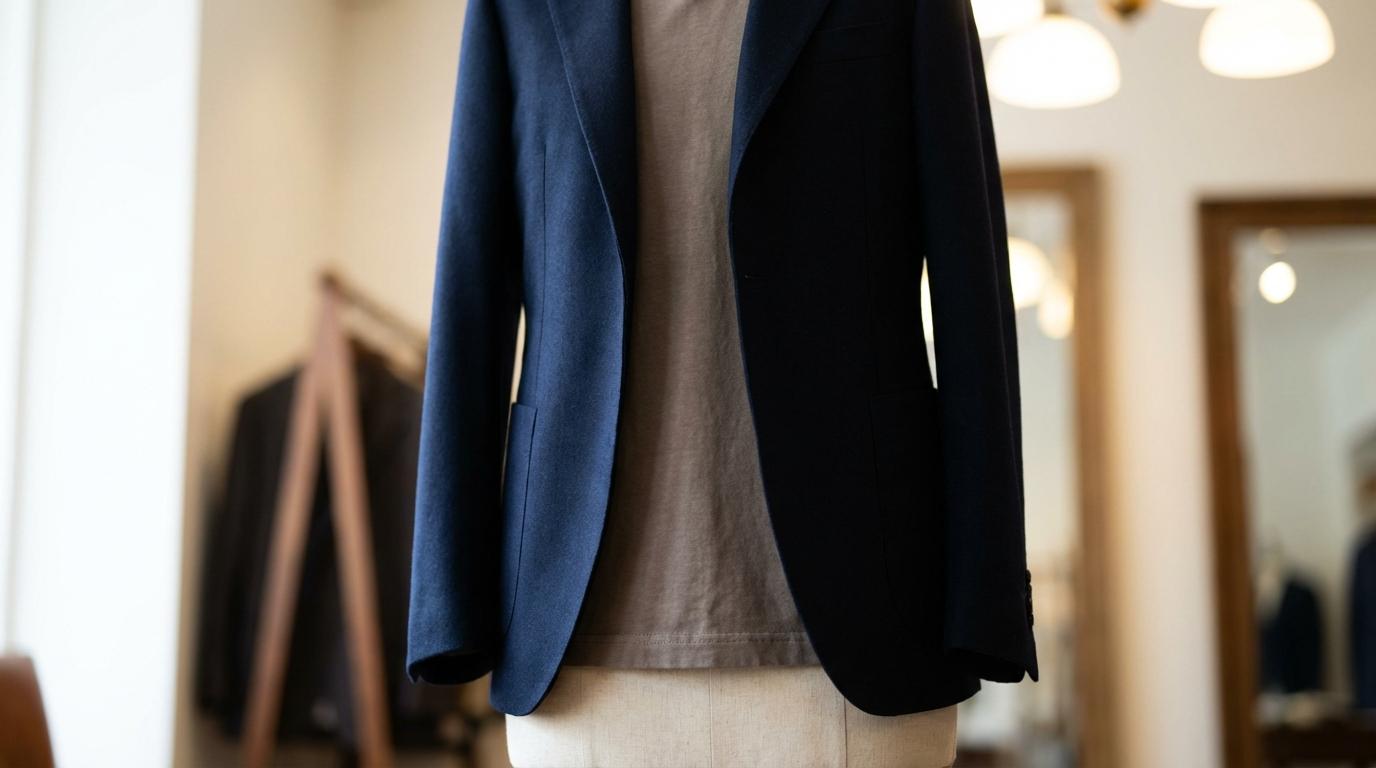


Clothes are rarely “wrong” for a body. They may simply be cut for a different body type. When you start choosing clothes based on your body type, you’ll find outfits more quickly that fit well, feel comfortable to wear and look smart without being too flashy.
Here’s a simple style guide for three classic challenges faced by men: broad shoulders, a bit of a tummy and a tall, lanky build. You may well fall into several categories at once, so think of these tips as tools that you can combine.
Find out your body type without overcomplicating things
Dressing for your body shape isn’t about hiding yourself. It’s about balance: making your upper body, waist and legs work together so that your clothes hang nicely and your proportions look well-considered.
Stand in front of a mirror wearing a T-shirt that fits reasonably well and a pair of jeans. Look for three things: the width of your shoulders, where you’re fullest (chest, stomach, hips), and whether your upper body and legs look “long”.
A small point that many people overlook: the size at the neck or waist isn’t the whole story. Two men may wear the same size but have completely different requirements in terms of shoulders, length and leg width. That is also why size ranges such as plus sizes and Number sizes (LT to 6XLT) can make a noticeable difference when it comes to getting the fit just right.
Broad shoulders: make your upper body look more composed
The classic “V-shape” with broad shoulders and slightly narrower hips looks sporty, but can also mean that the upper body draws all the attention. The aim is to draw the eye downwards slightly and create a more balanced silhouette.
Choose tops that create the illusion of length and lightness, rather than adding extra width. V-necks and open collars often work wonders because they create a vertical “space” in the centre of the chest. A shirt with open collar or a polo shirt with a couple of buttons undone can have the same effect.
At the same time, it helps to keep the top half looking relaxed. A plain T-shirt, a dark jumper or a shirt with a subtle texture allows the shoulders to fall more naturally. Conversely, very bold horizontal stripes, large chest prints and overly stiff fabrics can make the shoulders appear even broader.
On jackets and blazers, the shoulder seam is crucial. If it sits outside your shoulder bone, you’ll end up with a “shoulder gap” that looks wider than necessary. A single-breasted blazer with a slim lapel and no heavy padding often creates a more flattering overall look than a wide, double-breasted style.
Centre-front: create length, space and a flattering front
If you carry weight round your tummy, it’s tempting to go up a size and hope that everything will look better. This often ends up with shoulders that are too wide, sleeves that are too long and a “tent” that flaps about.
Go for clothes that drape over your body, rather than clinging or sagging. A T-shirt made from a slightly heavier fabric drapes more smoothly than a thin, soft jersey, which can bunch up around the tummy. Shirts with a little room around the tummy and a bit of length at the back often look more put-together, especially when you’re on the move.
Trousers are your best friend here. A good waist height that sits securely makes more of a difference than most people realise. A waist that’s too low can easily create a crease in the middle of your tummy, whilst a higher waist (without looking “grandad-like”) gives a smoother front and greater comfort when you’re sitting down.
Layer is also a great look when done right: an open cardigan, a light overshirt or a blazer Worn open, it creates two vertical lines that bring balance to the centre. Just be careful with very short jackets that end right at the stomach if you want a more streamlined look.
Tall and slender: break up the line and play with proportions
Being tall makes many styles easy to wear, but you can also end up looking “long” in a way where your clothes mostly form a vertical plane. The key here is to create deliberate breaks.
Colours are the quickest solution. A single-colour outfit from head to toe can look great, but on a very tall man it can make him appear even taller. Instead, try dividing your body into two: a dark top and lighter trousers, or vice versa. This creates a natural break in the middle of your body.
Patterns are something you can typically wear with confidence: checks, wide stripes, mottled knits and textures fill out the silhouette and add detail, so the eye isn’t just drawn up and down. You can also play with layers of different lengths: a shorter jacket over a longer jumper, or an overshirt that stops at the hips over a slightly longer T-shirt.
It’s worth checking the size chart if you often find that your sleeves are too short, the back is too short, or your trousers ride up. A good length gives a more “expensive” look, even with very simple basics.
Fit first: three places you should always check
It’s often the small adjustments that make all the difference, particularly with plus sizes and larger sizes. Once the fit is right, colours and trends become secondary.
Here is a handy checklist you can use in the changing room or at home in front of the mirror:
- Shoulder seam: It should rest on the shoulder bone, not hang down onto the upper arm
- Belly and front: The fabric should drape smoothly without being too tight around the buttons or forming large pleats
- Length: Tops should cover the waistband, and trousers should have a natural “break” at the shoe
If you’re only going to adjust one thing, start with the shoulders on tops and the waist on trousers. That’s where most fit issues start.
What should you choose and what should you steer clear of?
It can be useful to have a quick overview. Use the table as a guide, not as set-in-stone rules.
| Body type | Good choices | Please be careful with |
|---|---|---|
| Broad shoulders | V-neck, open collars, plain colours or subtle patterns on the top half, single-button blazer without padded shoulders | Very wide horizontal stripes at the top, thick shoulder padding, double-breasted jacket in a stiff fabric |
| Stomach in the middle | Tops that skim the body, slightly heavier fabrics, worn in layers with gaps, trousers with a fixed waist height | Very thin, clingy T-shirts, low-waisted ones that cut right across the middle of the tummy, short jackets that stop at the widest part |
| Tall and long | Colour contrasts between top and bottom, checks/textures, layers of varying lengths, different lengths on shirts and trousers | Excessively long, monotonous “column-like” styles with no breaks, sleeves that are too short, and leg lengths that make the clothes look too small |
Small changes that make a big difference in everyday life
When you’re getting ready in the morning and just want to look presentable, it helps to have a few tried-and-tested tricks that almost always work.
Try thinking in terms of “weight distribution”. If you have broad shoulders, shift a little more weight onto your legs by choosing a straight or slightly bootcut fit rather than very narrow trousers. If you have a tummy, draw attention to your face and legs, whilst keeping the mid-section understated. If you’re tall, create a deliberate break at the waist with a belt, a colour change or a layer.
Simple details can also influence the proportions:
- A polo shirt with an open collar makes the neck and chest appear more vertical.
- A shirt with a small check pattern can be a more understated choice than one with bold contrasts if you want to tone down your top half.
- A knitted garment with ribbing and texture can give shape without being too tight.
And yes, shoes do matter too. A chunkier trainer or boot can give a tall man a sense of “grounding”, whilst a very pointed, elegant shoe can make the overall look appear longer and lighter. If you have a bit of a tummy, a shoe with a bit of volume can draw the eye downwards and create balance.
Outfit templates you can copy straight away
It’s easier to get it right when you have a few tried-and-tested combinations. Here are some that usually work well and are easy to put together in standard, plus sizes and plus-size ranges.
For broad shoulders:
- Dark V-neck T-shirt + lighter-coloured straight-fit jeans + simple trainers
- Shirt with an open collar + chinos with a slightly wider leg + belt that go with the shoes
For a flat tummy:
- A shirt made from slightly heavier cotton, worn loosely + jeans with a firm waist + a light, open-fronted overshirt
- A plain dark T-shirt without a large print + an open blazer + straight-leg or slightly flared trousers
For tall and long:
- Textured knitwear + trousers in a contrasting colour + boots
- Checked shirt + plain overshirt + trousers with a distinct hem at the ankle
If you’re not sure where to start, start with the trousers. Once the waist and leg width fit properly, it becomes much easier to choose tops.
At Birger, you often find that the best solution isn’t “more coverage”, but a better fit and the right lengths. And if you’re shopping online, it’s a good idea to measure a shirt and a pair of trousers you already like, and compare them with size chart, especially when you go up to sizes 2XL to 8XL or larger in LT lengths.
It’s not the body that has to fit into the clothes. It’s the clothes that have to fit the body.
Facebook
WhatsApp
Twitter
LinkedIn
Pinterest
Latest posts

Big & Tall: What does it mean - and what size is right for you?
22 December 2025
No Comments
Everyday style guide: 7 outfits for plus size men
24 December 2025
No Comments
Jeans and chinos in 8XL: How to choose the right model
30 December 2025
No Comments
Shirts for big men: materials, cuts and comfort explained
2. January 2026
No Comments
Underwear for plus sizes: Comfort without compromising on support
8. January 2026
No Comments
