
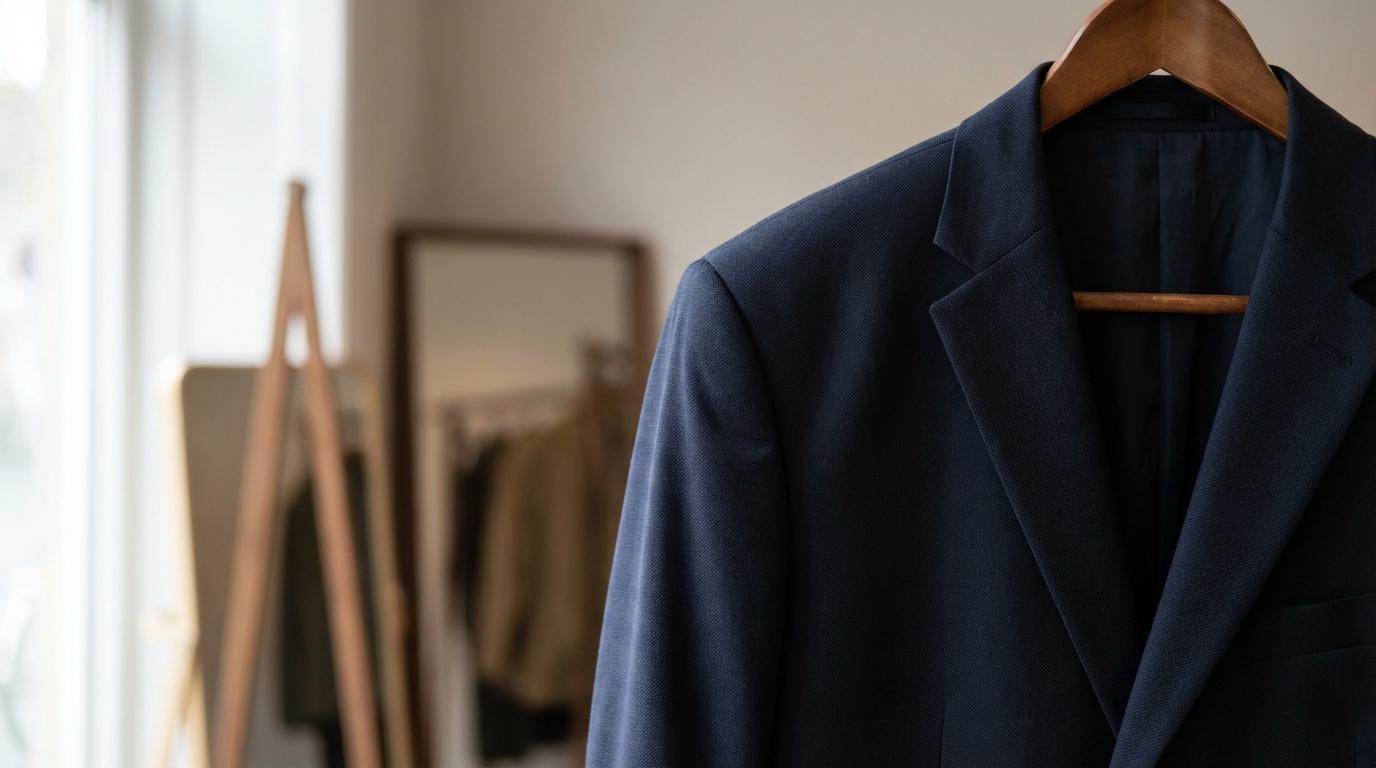


A blazer can be the one item of clothing that brings the rest of your wardrobe to life. It can make a T-shirt It adds a sharper look, gives jeans a more grown-up feel and makes a shirt look less “office-y”. For many men who wear larger sizes, the challenge is simply that a blazer often feels like something you have to squeeze into, rather than something that suits you.
It doesn’t have to be that way. With the right fit, the right materials and a few simple styling tips, a plus-size blazer can become your go-to jacket, for both everyday wear and special occasions.
Why the blazer is particularly popular in larger sizes
A blazer creates a silhouette. It’s not a question of “hiding” the body, but of giving it a neat, understated look with structure around the shoulders and chest, and a drape that doesn’t cling.
At the same time, the blazer is versatile. It can be worn in a classic style with a shirt and smart trousers, or in a more casual way with a T-shirt and dark jeans. When sizes go up to 3XL, 5XL or 8XL, that versatility becomes even more valuable, because you’ll often want a few tried-and-tested “go-to” combinations that always work.
A good blazer doesn’t feel like a suit of armour either. It feels like indoor outerwear: light, sturdy and comfortable to wear for hours on end.
Fit first: what to check before styling
Styling can only really enhance your look if the blazer fits properly. With larger sizes, it’s particularly important to have enough room in the right places, so that the jacket doesn’t feel tight across your back, shoulders or stomach when you move.
Start by putting the blazer on over whatever you’d normally wear underneath. Many people try it on over a thick jumper, but in practice they wear it over a shirt. That gives the wrong impression.
Here’s a quick check you can do in front of the mirror (preferably whilst moving your arms):
- Shoulders: The shoulder seam should sit close to your natural shoulder, without “digging in”
- Back and chest: You should be able to stretch your arms out in front of you without feeling any tightness between your shoulder blades
- Length: The blazer should cover your bottom, and it shouldn’t ride up when you sit down
- Sleeves: The sleeve should reach down to the back of the hand; many larger sizes require extra sleeve length, particularly in TALL styles
- Closure: When you do up the buttons, the front should drape neatly without forming a distinct “X” shape”
It’s perfectly normal to have to choose between a regular or comfort fit in larger sizes. Also look out for styles with more room across the back or designs that allow for movement, and consider a fabric with a slight stretch if you plan to wear the blazer a lot.
Materials that provide comfort and a nice drape
When a blazer is to be worn on a daily basis, the fabric is almost as important as the cut. Many men who wear larger sizes find that a stiff blazer gets hot, feels tight and loses its shape as soon as they move.
A good place to start is with fabrics that offer a bit of everything: breathability, freedom of movement and shape retention. Cotton with a touch of elastane, soft jersey, wool blends and linen blends are often a good choice, as they drape well and still look smart.
A small, practical tip: Wearing a smooth layer underneath your shirt can help if your shirt tends to “bulge” under your blazer. A simple cotton T-shirt worn under your shirt can help it sit more neatly and make the whole outfit more comfortable.
Colours and patterns that bring a sense of calm to your look
Colours aren’t about rules, but about impact. Plain blazers and subtle patterns are the easiest to style and create a more cohesive look. That’s also why navy, charcoal grey and black are safe choices if you want a single blazer that can do it all.
If you’d like to add a bit more interest to your outfit, go for small patterns, mottled fabrics, subtle stripes or microstructures in the fabric. They add depth without being too busy.
Very wide horizontal stripes and large, high-contrast patterns are harder to make look understated, especially when the blazer is a prominent feature of the outfit. If you love patterns, you could instead let the shirt, tie or pocket square take centre stage, whilst the blazer keeps things understated.
Outfit formulas that work when you want to look sharp without overthinking it
It’s nice to have a few outfits you can put together without spending ages in front of the wardrobe. Here’s a simple way to think about a “complete look”: choose one base (trousers + top) and let the blazer tie it all together.
Below is a table showing three typical situations and simple outfits that suit most plus-size figures, as they are based on clean lines and good proportions.
| Reason | Under the blazer | Trousers | Shoes | Tips on proportions |
|---|---|---|---|---|
| Office and meetings | Plain-coloured shirt | Chinos or smart woollen trousers with a regular waist | Leather shoes or plain trainers | Make sure the blazer is slightly fitted, not tight |
| Weekdays and lunchtimes | T-shirt or polo shirt in heavy-weight cotton | Dark jeans | Trainers or Chelsea boots | Choose a dark background for a sense of calm and “depth” |
| A party in a shirt and tie | Business shirt + tie | A pair of smart, matching trousers | Classic leather shoes | Make sure there is extra room across the back and that the sleeves are the right length |
Once you’ve got those three “formulas” in mind, it becomes much easier to change your style simply by swapping one thing: a T-shirt for a shirt, trainers for leather shoes, or jeans for woollen trousers.
Layer upon layer without adding too much volume
Layers add depth, but when it comes to larger sizes, too many layers can quickly feel heavy, both visually and physically. The trick is to choose thin, flowing layers and to keep the thickest fabrics on the outside.
If you want to stay warm under your blazer, opt for a thin merino jumper, a lightweight knit with a smooth surface, or a waistcoat made from a fabric that doesn’t “catch” on the blazer’s fabric. Avoid very thick hoodies under a classic blazer, unless the blazer is designed for a more casual look and has a slightly looser fit.
A simple tip that often works wonders: wear your blazer unbuttoned when you’re dressing casually. The open front creates a smart vertical line and looks more relaxed, whilst still giving you the structure of the blazer around your shoulders.
Small details that make the blazer more flattering
When the fit is almost spot on, it’s the details that make the whole outfit look well thought out. This is also where many plus-size men can make a big improvement with just a few small adjustments.
Pay particular attention to the lengths and “transitions” in your outfit: where the blazer ends, where the trouser waistband sits, and whether there’s a distinct line at the waist. Trousers with a regular waist often create a more understated look when worn with a blazer, as the shirt can lie neatly and you avoid a visible “seam”.
Here are a few details worth keeping an eye on:
- Key point: A classic two-button blazer is often easy to wear because it creates a neat V-shape without fastening too high up
- Back: A moderate width often looks balanced in larger sizes
- Handkerchief: Use it as a splash of colour, not as “clutter”
- Belt: Choose a leather belt of the correct length so that the tail isn’t too long
- Shirt collar: A collar with a bit of texture looks smart under the blazer’s lapel
If you want to make it even more practical, bear in mind this rule of thumb: the more formally you dress, the more everything should fit comfortably and smoothly. The more casual your outfit, the more textures and relaxed fabrics you can get away with.
How to find the right size when trying things on at home
Many men who wear larger sizes will recognise this: the size on the label is one thing, but how it feels on the body is quite another. That’s why it makes good sense to try them on at your leisure, and ideally in several sizes or two different lengths if you fall between a standard size and a TALL size.
At Birger, we specialise in sizes ranging from M to 8XL and TALL from LT to 6XLT, which makes it easier to get the width and length just right in the same blazer. When shopping online, it’s a good idea to think in terms of a full outfit: put on the trousers you plan to wear it with, and try sitting down and reaching for something to see if there’s enough room in the back and shoulders.
A simple checklist to make home testing safer:
- Measure a blazer you already feel at ease in
- Try it with both a T-shirt and a shirt, so you can feel the difference
- Walk around a bit, sit down, stand up, and see if it “pulls”
- Check the sleeve length with your arms hanging loosely by your sides
Comfort is still the most important thing. When your shoulders and back feel free, and the blazer hangs nicely without feeling tight, the rest of the styling becomes almost effortless.
The blazer as a go-to companion for jeans, chinos and smart trousers
Dark jeans paired with a blazer are one of the most flattering combinations for plus sizes, because denim provides structure and a slightly edgier look that balances out the blazer’s smartness. Go for jeans with a good leg shape, preferably slightly tapered, so that the trousers aren’t too wide at the ankle.
Chinos are the most versatile option. They can look smart with a shirt and leather shoes, and they can be casual with a T-shirt and trainers. Choose a pair of chinos with a regular waist and a fabric that isn’t too thin, so they keep their shape.
For parties or occasions where a tie is required, smart woollen trousers or classic suit trousers are often what make an outfit look most “put-together”. Here, it’s particularly important to think about balance: plenty of room in the blazer across the back, and trousers that sit comfortably at the waist so the shirt doesn’t ride up.
If you want to keep it simple, build your wardrobe around one item dark blazer, one lighter-coloured blazer for spring and summer, and two styles of trousers that you know suit you really well. That’s often enough to cover most occasions, from everyday wear to special events.
Facebook
WhatsApp
Twitter
LinkedIn
Pinterest
Latest posts

Big & Tall: What does it mean - and what size is right for you?
22 December 2025
No Comments
Everyday style guide: 7 outfits for plus size men
24 December 2025
No Comments
Jeans and chinos in 8XL: How to choose the right model
30 December 2025
No Comments
Shirts for big men: materials, cuts and comfort explained
2. January 2026
No Comments
Underwear for plus sizes: Comfort without compromising on support
8. January 2026
No Comments
