


Plus-size rain jackets: water column pressure, breathability and materials explained
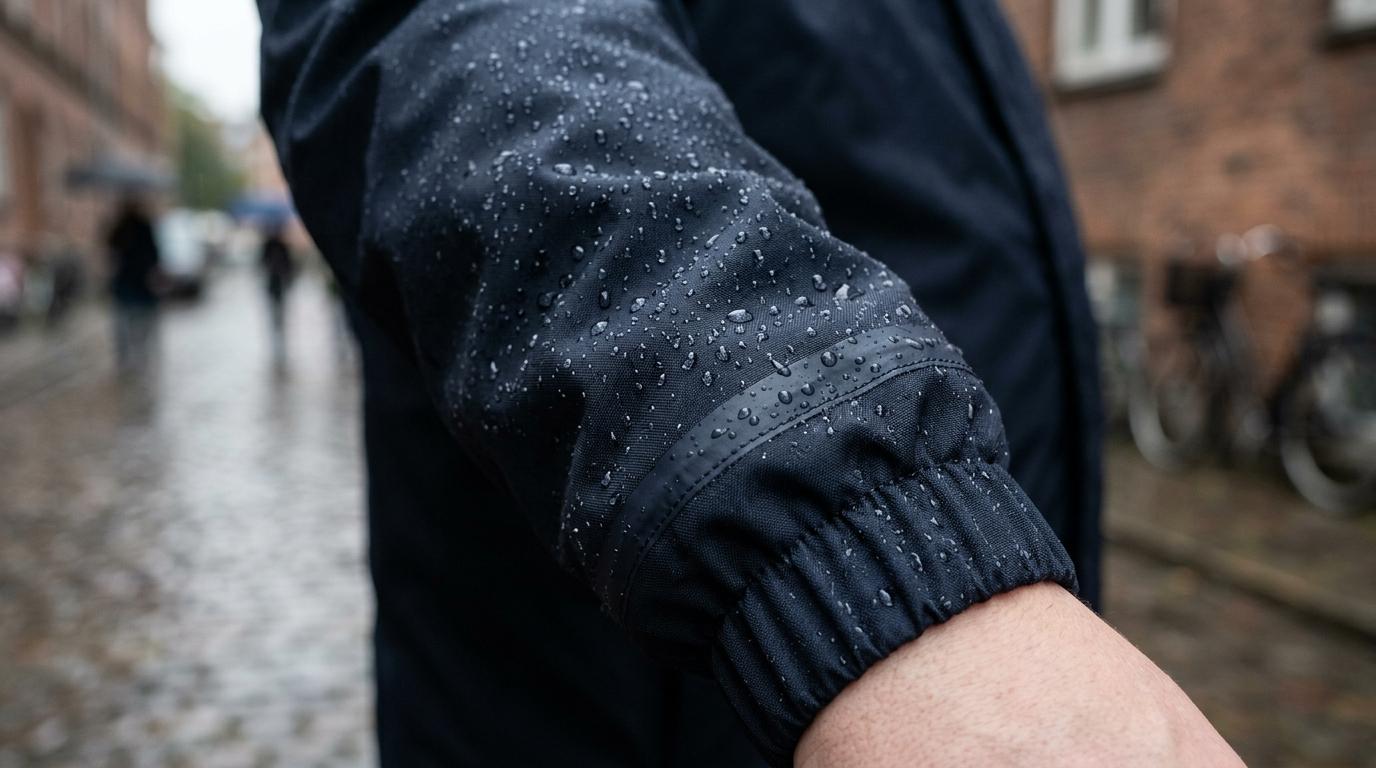
When you’re looking for a men’s rain jacket in large sizes, it’s tempting to go straight for the size that fits and the colour you like best. But if the jacket is to work properly in real-life situations, it’s the technical details that determine whether you’ll stay dry and comfortable, or end up damp, hot and a bit irritated after a short while.
This is particularly true when using plus-size or tall sizes. Here, this means fit What’s more, ventilation is even more important, and the choice of materials is more noticeable in everyday life. A rain jacket should, of course, protect you from the rain, but it should also be comfortable to wear when you’re walking, cycling, shopping or standing outdoors in windy and showery weather.
Water column pressure in rain jackets for men in large sizes
Water column pressure indicates how much water pressure a material can withstand before water seeps through. The figure is given in millimetres, and it is a standard way of measuring waterproofing. If a rain jacket has 10,000 mm water column pressure, in short, this means that the material can withstand quite high water pressure before it gives way.
In practice, it’s a good guide, but not the whole story. A jacket may well have an impressive water column rating and still prove disappointing if the seams aren’t taped, the zip isn’t protected, or the fit allows water to seep in more easily at the shoulders and waist. That’s why the water column rating should always be considered alongside the jacket’s construction.
The size of the jacket itself does not affect the waterproofing requirements. A rain jacket in size 5XL does not require a higher water column pressure than one in size XL. However, comfort often becomes more important in larger sizes, as there is more fabric, more body heat and a greater need for the jacket to work well with the body whilst in motion.
A simple rule of thumb might look like this:
- 0 to 5,000 mm: light rain and short-term use
- 5,000 to 10,000 mm: normal Danish rainfall and everyday use
- 10,000 to 20,000 mm: heavy rain, strong winds and more intensive use
- Over 20,000 mm: very high protection and more technical applications
The measurement is often carried out using a laboratory test in accordance with ISO 811, which determines how long it takes for water to penetrate the fabric. It sounds very technical, and it is, but as a customer, what you need to know most of all is that a higher figure usually means better protection against sustained rain.
Breathability in plus-size rain jackets for men
If water column pressure is about keeping the rain out, then breathability allowing body heat and moisture to escape. This is just as important, if not more so.
In fact, many people find that they don’t get wet from the rain, but from their own body heat. This is particularly relevant for raincoats in larger sizes, where there is often more contact between the fabric and the body, and where poor ventilation leads more quickly to a clammy feeling inside the jacket.
Breathability is often measured as MVTR in g/m²/24 hours. Here, the opposite logic to RET values applies: the higher the MVTR, the better. If, on the other hand, you see a RET value, a lower figure is better. It may seem a little confusing, but the point is simple. The jacket must be able to wick away moisture whilst you are wearing it.
In larger sizes, breathability isn’t just a luxury feature. It’s a real comfort factor, especially if you’re wearing the jacket for more than just a quick trip to the car.
When assessing breathability, it’s a good idea to look at more than just one figure:
- MVTR figures: A higher value means better moisture transport
- RET value: A lower value means better breathability
- Ventilation: Zips under the arms or openings at the back are a great help
- Lining: A light inner lining can make the jacket more comfortable against the skin
Many everyday jackets in large sizes have a breathability rating of around 3,000 to 5,000 g/m²/24 hours, whilst more technical models have a higher rating. For normal everyday use, moderate breathability may be sufficient. If you walk a lot, cycle or tend to get hot easily, you’ll generally be better off with a model offering better ventilation and a higher breathability rating.
Materials used in rain jackets: polyester, nylon, PU and membranes
The material is where comfort and function come together. Two rain jackets may look very similar, but feel completely different to wear because they are constructed differently.
The most common outer fabrics are polyester and nylon. Both are used because they are lightweight, hard-wearing and work well in combination with coatings or membranes. It is rarely the fibre itself that makes the jacket waterproof. It is typically the coating or membrane that provides this protection.
Here is a quick overview of the most common types of material:
| Material or construction | Typical water resistance | Typical breathability | Characteristics |
|---|---|---|---|
| Polyester or nylon with a PU coating | 3,000 to 10,000 mm | Low to moderate | Soft, affordable, often ideal for everyday use |
| Membrane jacket made from ePTFE or similar material | 10,000 to 30,000+ mm | High to very high | More technical, often more expensive, suitable for active use |
| Hydrophilic membrane | 10,000 to 20,000+ mm | Good | Soft and sturdy, but can feel a bit heavy |
| DWR-treated fabric without an actual membrane | Low to moderate | Low to moderate | Water-repellent rather than genuinely waterproof |
| 2.5-layer construction | Varies | Often moderate | Lightweight and easy to pack, but not always the most comfortable |
| 3-layer construction | High | Good to very high | Sturdy, high-tech and often best suited to continuous use |
PU, or polyurethane, is very common in large-sized rain jackets. This is partly because it offers reasonably good protection at a more affordable price, and because the material is often supple. It can be perfectly fine for everyday use in city weather.
Membranes such as ePTFE and other technical solutions are superior in terms of both price and performance. They often offer better breathability and greater waterproofing, but the jacket may also have a more “outdoor” look and feel, and can sometimes be a little stiffer to the touch.
2.5-layer jackets are popular because they’re lightweight and easy to pack away. That’s handy, but they aren’t always the most comfortable if you wear them for long periods at a time. 3-layer models are often better for longer wear and harsher weather, but they take up more space and usually cost more.
Fit and details of plus-size rain jackets
When it comes to rain jackets for men in larger sizes, fit isn’t just a question of how the jacket looks. It’s also about how well it works.
A jacket that is too tight puts strain on the seams and zips and can make the fabric feel less breathable, as moisture cannot escape from the body. A jacket that is too big may flap about, trap condensation and feel heavier than necessary. The right fit provides space, but not too much.
Tall models is often a major advantage.
They provide extra length in the body and sleeves, so the jacket doesn’t ride up when you sit down, cycle or stretch your arms out. This is particularly useful if you are tall and also wear larger sizes, where standard measurements are often too short.
Details that often make a real difference in practice include:
- Taped seams: Rain will quickly seep through the seams if they are not sealed
- Two-way zip: Gives you more freedom of movement when you’re sitting down
- Adjustable hood: Better protection without the visor falling into your eyes
- Ventilation under the arms: Significantly improves comfort during physical activity
- Elasticated cuffs
- Longer back panel
- Adjustable base
- A smooth lining that’s easy to wear over a jumper or blazer
It’s also worth thinking about what you’ll be wearing under your jacket. Many men wear a rain jacket over a shirt, jumper or light fleece. In that case, the fit across the shoulders, stomach and upper arms quickly becomes more important than the size stated on the label.
Price ranges and technical specifications for rain jackets for larger men
Price and technology are often linked, but not always in a way that makes the most expensive jacket the right one.
At the lower end of the price range, you often see raincoats costing around 3,000 mm water column pressure and a correspondingly moderate level of breathability. It can be suitable for short walks, light rain and general everyday use. Many models in this category are made from PU-coated polyester and prioritise flexibility and affordability.
In the mid-range and above, there are many models measuring 10,000 mm or more, often featuring better membranes, better seam sealing and a more sophisticated construction. You’ll typically also enjoy greater comfort if the jacket is worn frequently.
At a shop specialising in men’s clothing in larger sizes, such as At Birger's, it makes good sense to consider both fit and intended use. Some models in the plus-size range are designed for practical everyday use with moderate technical specifications, whilst other brands focus more specifically on outdoor use with higher performance ratings and more advanced materials. Both types have their place. The question is, what do you actually need the jacket for?.
In short, the market often looks like this:
- Budget models: Lower price, simpler materials, typically 3,000 to 5,000 mm
- Middle class: A better balance between comfort and protection, often around 10,000 mm
- Premium technical jackets: High waterproofing, high breathability and additional features for active use
Hvis du mest skal bruge jakken i byen, behøver du sjældent topniveau. Hvis du er meget ude, går langt eller bruger jakken i mange timer, kan den tekniske forskel mærkes tydeligt.
Sådan vælger du regnjakke i store størrelser til hverdagen
Det bedste køb starter ikke med det højeste tal, men med dit brugsmønster. En regnjakke til pendling, hundeluftning og indkøb behøver ikke nødvendigvis samme opbygning som en jakke til lange ture i hårdt vejr.
Mænd i store størrelser har ofte mest glæde af en model, der kombinerer tre ting: ordentlig plads, fornuftig ventilation og en længde, der passer kroppen. Det lyder enkelt, men det er ofte her, de gode køb skiller sig ud fra de halvgode.
Prøv at tænke valget sådan her:
- Hvor længe har du jakken på ad gangen?
- Hvor meget bevæger du dig i den?
- Skal den bruges over let tøj eller flere lag?
Hvis du sjældent er ude i mere end 20 til 30 minutter, kan en enklere regnjakke være rigeligt. Hvis du let får det varmt, bør du prioritere åndbarhed og ventilationsdetaljer højere. Og hvis du både er høj og kraftig, er tall-pasform ofte en større gevinst end et ekstra højt vandsøjletryk.
En god regnjakke i store størrelser til herre skal ikke bare kunne modstå regn på papiret. Den skal fungere i dansk vejr, på din krop og i din hverdag. Når de tre ting passer sammen, mærker man forskellen med det samme.
Facebook
WhatsApp
Twitter
LinkedIn
Pinterest
Latest posts

Big & Tall: What does it mean - and what size is right for you?
22 December 2025
No Comments

Everyday style guide: 7 outfits for plus size men
24 December 2025
No Comments

Jeans and chinos in 8XL: How to choose the right model
30 December 2025
No Comments

Shirts for big men: materials, cuts and comfort explained
2. January 2026
No Comments
Underwear for plus sizes: Comfort without compromising on support
8. January 2026
No Comments
