


‘Business casual’ sounds simple, but for many men who wear larger sizes, it can quickly become unclear in practice. Should you go for a shirt or a polo shirt? Can you wear a jumper? And how do you look well-dressed without feeling stiff and constricted in something that doesn’t fit your body?
The short answer is that a professional look is rarely down to the suit alone. It’s all about the fit, the length, the materials and a calm colour palette. When these elements are just right, a shirt, a pair of smart trousers and a light jumper can look far sharper than a suit that’s too tight in all the wrong places.
When business casual actually works
Business casual is a middle ground between very formal and very casual. You should look presentable for meetings, days in the office, client visits and business lunches, but without looking as though you’re on your way to a wedding.
For men who wear larger sizes, this is often an advantage. A full suit places high demands on the shoulders, sleeves, waist and leg length all at once. With business casual, you can instead mix and match individual pieces that better suit your body shape and your everyday life.
A good place to start is to think in terms of simple combinations that you can use time and time again.
- shirt + chinos
- polo shirt + blazer
- fine knit + smart trousers
- an Oxford shirt + dark jeans, if the dress code allows it
Fit comes before the size label
Many people automatically go up a size when their clothes feel tight. This rarely gives the best result. You might get more room around your waist, but you’ll also end up with shoulders that are too wide, sleeves that are too long or too much fabric around your chest.
It is far better to choose the right fit. In larger sizes, a regular fit often gives a smart, classic look, whilst a comfort fit or relaxed fit may be the right choice if you need extra room across the chest, stomach or upper arms. If you have a long torso or long arms, number sizes often the difference between an outfit that looks well thought-out and one that constantly needs tucking in.
This is particularly noticeable with shirts. If the shirt rides up when you sit down, or if the buttons are straining, it looks less professional, even if the colour and fabric are just right.
When you’re trying on a shirt or a blazer, look out for this:
- The shoulders: The seam should sit close to the edge of the shoulder, not hang out onto the upper arm
- Chest and stomach: The fabric should drape smoothly without any tight buttons
- Length: Your shirt should stay tucked in, even when you stretch your arms out
- The sleeves: They must reach the wrist without crawling up
- The back: There should be plenty of room to move about, but no large fabric bags
The fabric does more than you might think
A professional look isn’t just about the cut. The material It also determines how the clothes fit, how warm they are, and whether you feel comfortable after eight hours at work.
Cotton is still one of the safest choices. Poplin is smooth and lightweight, making it ideal for warm days and for wearing as a shirt under a jumper or blazer. Oxford is slightly heavier and has more texture, so it suits many body types very well. A small amount of stretch can be a great advantage, especially in shirts and trousers, where you want freedom of movement without losing your shape.
Fine-knit jumpers in cotton or merino are also a strong choice for a business-casual wardrobe. They make a smart layer over a shirt or can be worn on their own with a T-shirt underneath. Linen and linen blends are great in summer, but they crease more easily and therefore look a little more casual.
Here are some materials that often work well in everyday life:
- Poplin for lightweight shirts
- Oxford for more structure
- Cotton with a slight stretch
- Merino knitwear for layer upon layer
- Linen blends for hot days
The best elements to build around
It doesn’t have to be complicated. With just a few well-chosen items of clothing, you can create lots of combinations that look professional without becoming monotonous.
| Share | Go for | Give it a rest |
|---|---|---|
| Shirt | Comfort fit or regular fit in cotton, preferably poplin or Oxford | Very stiff fabrics and a fit that’s too tight |
| Trousers | Chinos or smart trousers with a slight stretch in navy, grey or sand | For thin fabrics and very low waists |
| Knit | Fine-knit jumper or cardigan in cotton or merino | Heavy, very bulky jumpers |
| Blazer | A standalone blazer with a flattering drape and a good length | Styles that are far too short or have very sharp shoulders |
| Belt and shoes | Simple leather details in subtle colours | For sporty outfits that comply with a strict dress code |
A shirt is often the best place to start. A light blue, white or dark navy shirt can be worn in many different ways. At Birger, shirts from Casa Moda a good example of the style many men look for in business casual wear, because the comfort fit combines a smart look with more room where it really matters.
Trousers should be just as important as the top half. A pair of dark chinos Or smart trousers with a bit of stretch go with almost anything. Sunwill is a style that many people choose specifically for smart casual wear, as the trousers often strike a really good balance between comfort and a clean cut.
A blazer is still relevant, even if you don’t want to wear a suit. It can be worn on its own over a shirt, polo shirt or fine-gauge knit. For tall men, tailored styles often give a significantly better result, as both the sleeve and body lengths are taken into account from the outset. This means the jacket hangs more smoothly and looks more natural.
Muted colours almost always look best
Colours help to make business casual look effortless. The more subdued the colour palette, the easier it is to put together outfits that look well thought-out.
Navy, dark grey, medium grey, black, olive, sand and white are strong base colours. Light blue is almost always a safe choice for a shirt. If you’d like to add a bit more personality, you could opt for dark burgundy, dusty green or a muted brown shade in a jumper, belt or shoes.
Patterns are also welcome, but keep them subtle. Small checks, subtle stripes and delicate textures work better than large prints and stark contrasts. In larger sizes, this often creates a more relaxed and elongated look.
A tone-on-tone outfit is often a good choice. Dark blue trousers, a light blue shirt and a navy jumper look smart without feeling too formal.
Three foolproof everyday looks
It helps to have a few go-to outfits that you know work. That makes mornings easier, and your wardrobe feels more practical.
- Office day with meetings: A light blue shirt, navy chinos, dark brown shoes and a simple belt. Add a blazer if the occasion calls for a slightly smarter look.
- A normal working day: A dark polo shirt or fine-knit jumper, grey trousers and loafers or smart lace-ups. A great choice when you want to look well-dressed without appearing overdressed.
- A long day of travelling and being on the move: An Oxford shirt, dark-coloured stretch trousers and a light cardigan or blazer. It’s very comfortable, yet still looks professional.
Small details enhance the overall effect
It’s often the little things that tie a business casual outfit together. A decent belt, shoes that are clean and well-maintained, and a shirt that’s actually the right length make more of a difference than many people realise.
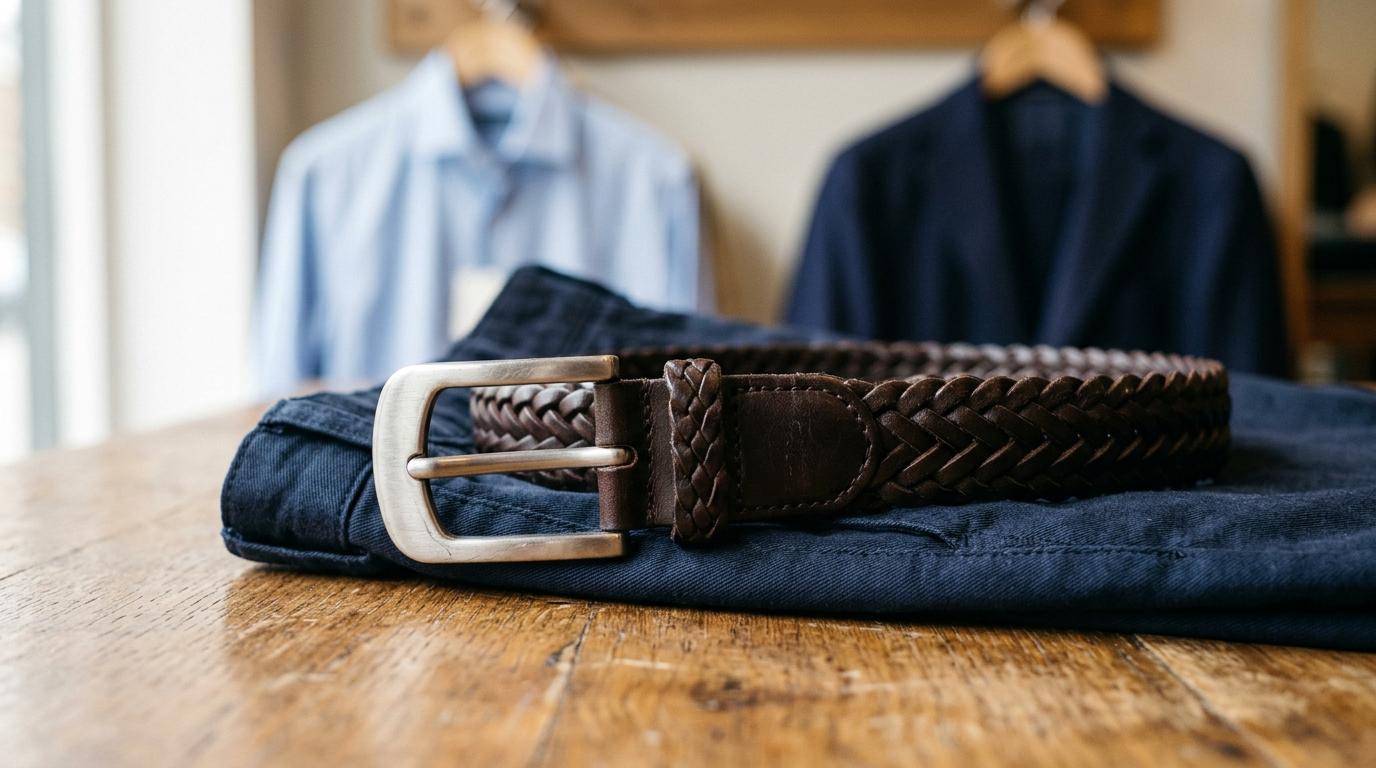
A good-quality belt ties the outfit together and creates a neat transition between the top and the trousers. Bosswik is a prime example of a brand that many people choose when they’re looking for sturdy belts, including in sizes and styles that work well for larger body types. Braided or slightly stretchy styles can be particularly comfortable throughout the day.
Your shoes can be simple. Derby shoes, loafers, smart boots or plain leather shoes are all suitable. White trainers may be acceptable in some workplaces, but if you want to play it safe, more classic shoes are still the easiest choice.
A watch, subtle socks and a well-designed bag or laptop bag can also tie the whole look together. As Belsac Creative describes in their Checklist for leather work bags, laptop protection, compartmentalisation and the comfort of the carrying handle are key features that make the bag both practical and functional, whilst maintaining a professional look.
When shopping online for plus-size clothing
Online shopping has become much easier, but when it comes to plus sizes, it’s still a good idea to be a bit organised. Especially as two brands in the same size can easily fit differently.
Chest measurement, waist, neck, inside leg length and, ideally, sleeve length. Always compare with the brand’s size guide, not just the size you usually buy. Also look out for terms such as ‘comfort fit’, ‘regular fit’, ‘tall’ or ‘LT’. These often tell you more than the size itself.
At Birger, the range is specifically designed around men’s sizes from M to 8XL and plus sizes from LT to 6XLT, so it’s easier to find clothes that fit both in width and length. When the range is designed for larger body types from the outset, it becomes easier to get the fit just right.
If you want to reduce bad buy, so please check these points before you book:
- The measurement chart: Compare your own goals with those of each brand
- Fit: Look for regular fit, comfort fit or tall
- The material: Feel free to choose cotton, stretch blends or fine knits that allow for good freedom of movement
- Length: If you’re tall, do take a look at shirts and blazers in particular
- Return policy: It’s reassuring to be able to try things out at home in peace
Build your wardrobe around a few standout pieces
You don’t need to replace your entire wardrobe to get off to a good start. In fact, it’s smarter to start with just a few pieces that can be mixed and matched.
A good place to start might be two shirts, two pairs of trousers, a fine-knit jumper, a blazer and a decent belt. If the colours go well together, you can quickly put together lots of outfits without buying too much. A white or light blue shirt, a pair of navy trousers, a pair of grey trousers and a dark jumper will go a long way.
The most important thing is that the clothes work with your body rather than against it. When the fit is right, the fabric feels good and the colours complement each other, business casual in larger sizes isn’t just a stopgap solution. It simply becomes an easy and practical way to dress for work, meetings and those days when you want to look smart without wearing a suit.
Facebook
WhatsApp
Twitter
LinkedIn
Pinterest
Latest posts

Big & Tall: What does it mean - and what size is right for you?
22 December 2025
No Comments
Everyday style guide: 7 outfits for plus size men
24 December 2025
No Comments

Jeans and chinos in 8XL: How to choose the right model
30 December 2025
No Comments

Shirts for big men: materials, cuts and comfort explained
2. January 2026
No Comments
Underwear for plus sizes: Comfort without compromising on support
8. January 2026
No Comments
